Subscribe to get the latest on artists, exhibitions and more.

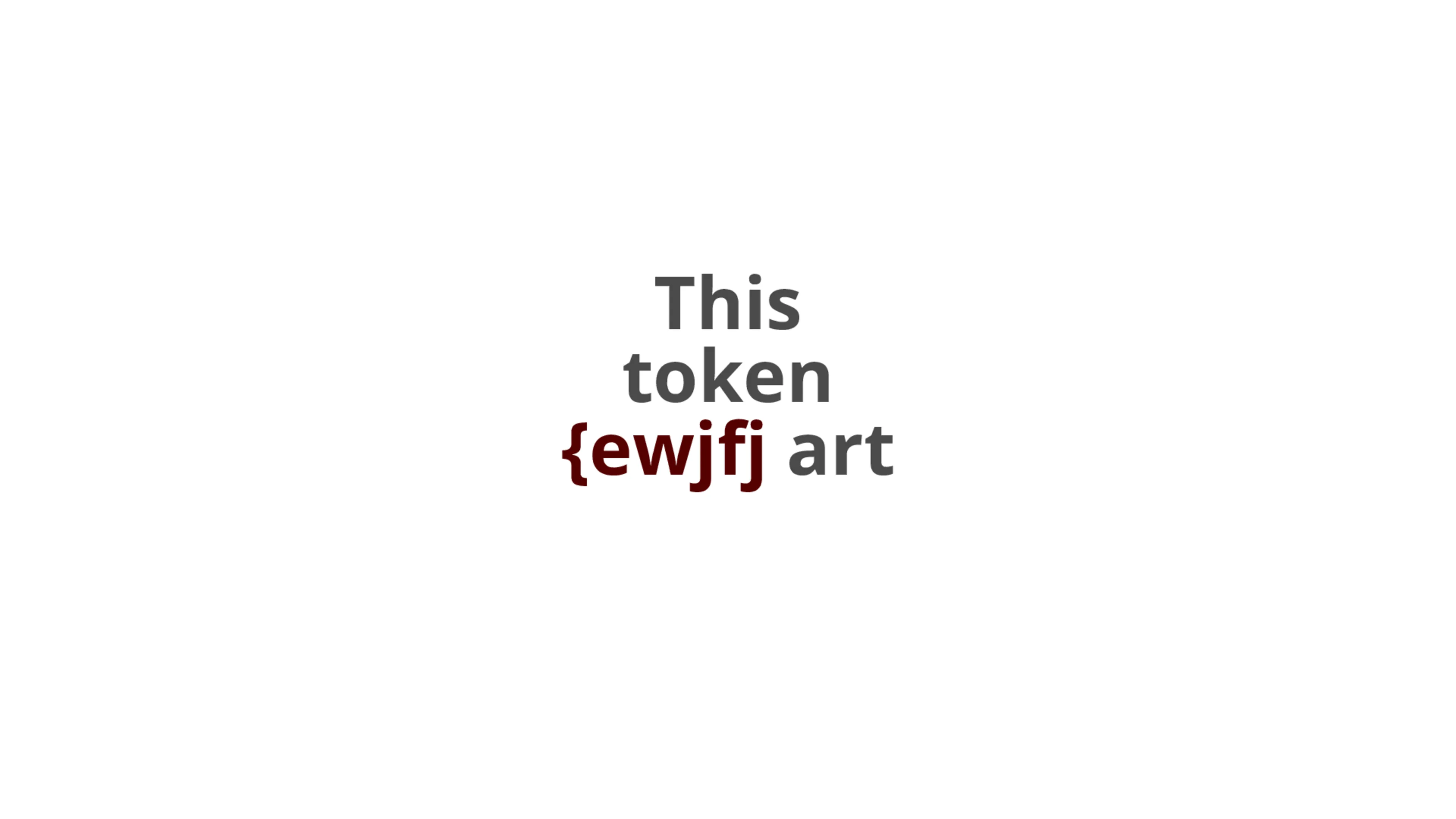
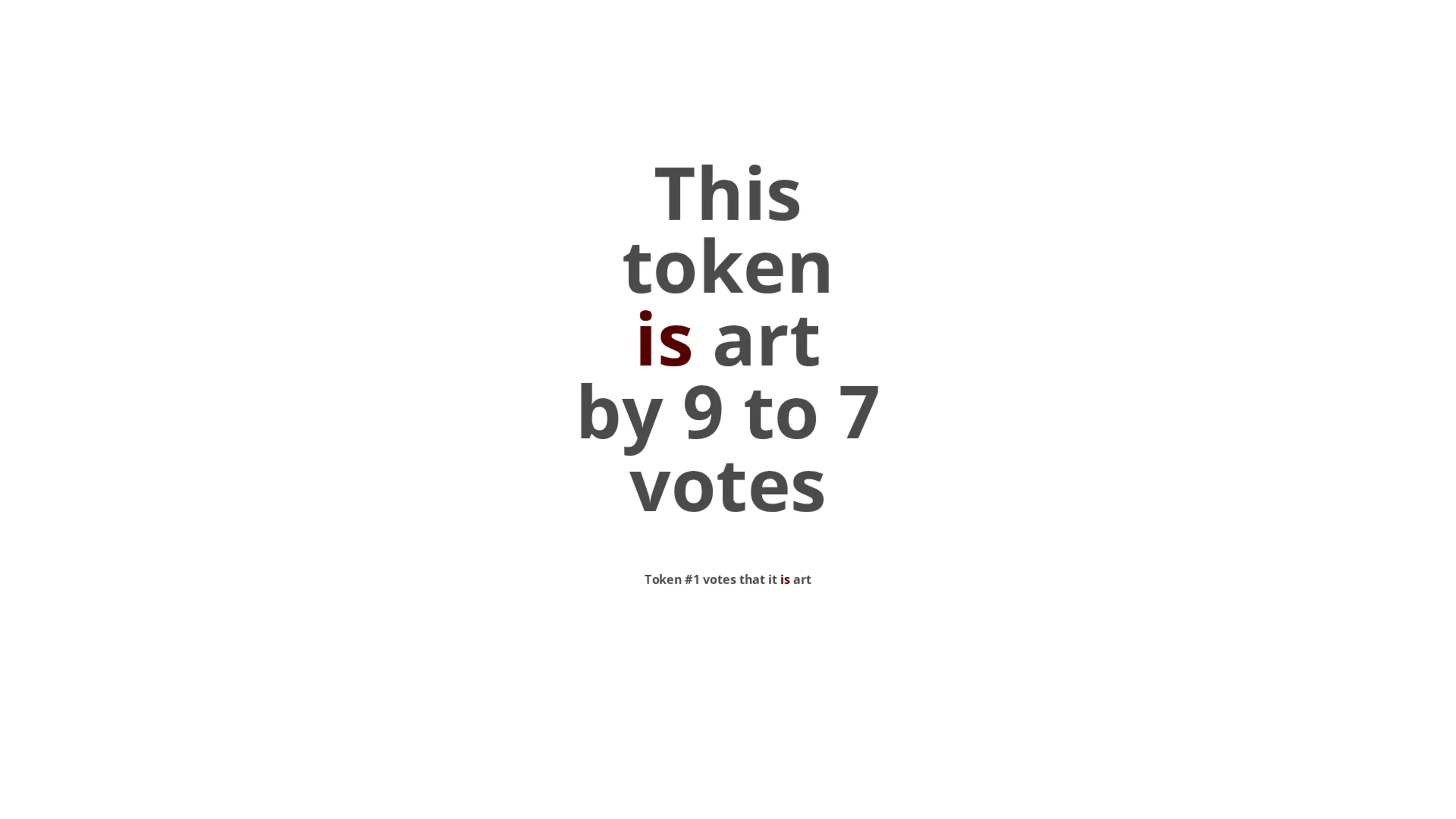
Koala Noosphere is a series of NFTs presented as museum-style placards. Each token stores a textual description in its metadata and renders that text as an image. The descriptions characterise each imagined artwork only through its resemblance to, or difference from, other entries in the series, resulting in wholly imaginary, relational works.
What initial inspiration underpins Koala Noonsphere, can you pinpoint a specific moment or idea that led to its inception?
When ideas that want to be made come to me I try to get out of their way and just do what they want. Sometimes that means that I don't remember what launched them. This project also had a longer gestation period than many. So the unfortunate truth is that I don't remember the initial inspiration for Koala Noosphere.
In terms of the ideas that went into the work, I have been making image description generators for a long time now, and this was a good way of applying them to my ongoing interest in the limits of property and ownership. The French philosophers Deleuze and Guattari's idea of a "smooth space", in which you can tell where you are relative to your local landscape but not where you are globally by reference to any kind of map or GPS system, became the theoretical hook. And the problem of ekphrasis, of describing artworks, has a long history.
Can you speak about the decision to make the language obscure and descriptions wholly relational?
The language is deceptively concrete at first - it mentions specific properties of the described image and refers to other works in the same series for comparison. But as the viewer looks for something quantifiable to build their understanding with, they find that the references in the description don't point to anything definite. Its obscurity is initially obscured. It hides the endless loops of relations that serve to ensure that the descriptions, in the final analysis, frustrate knowability.
They have to do this in order to create the aesthetic form and thereby the commodity - the property - form that they are intended to.
How does this series relate to your previous works such as Secret Artwork and Tokens Equal Text?
Koala Noophere relates very directly to those particular previous projects. It has "Secret Artwork"'s evasiveness through a surfeit of detail, its camouflage. And it has "Tokens Equals Text"'s pantomime of ownership, where reference doesn't amount to possession. It goes further than either because it doesn't have something at its core. It consists of dangling references. There's no secret, there's no archetype. This is all we can know, and we don't really know what it's about.

Why was the museum placard format important for this project?
My artist-trickster-archetype answer is: it is said that many gallery visitors spend more time looking at the placards accompanying artworks than they do at the artworks themselves. I wanted to make the thing that people spend their time looking at.
Placards have a familiarity and an unassuming authority that was useful to exploit. I did agonize over whether to do so, in terms of whether it was useful as a framing narrative or whether I should use ERC-721 metadata or review-style descriptions as the format instead. But the alternatives didn't have the association of direct accompaniment of the object that placards have, and lacked their institutional gravitas. And crypto artists and artworld institutions are circling each other suspiciously again at the moment, so it worked on the level of current anxieties as well.
Is confusion an intended part of the experience of this series?
Between artwork and description, and art object and administrative proxy, yes.
Can you speak to the idea of ownership without understanding, or the idea that you can own something completely, even if you can’t truly know or see it?
It is always the case that the viewer of an artwork need not own it, and the owner of an artwork need not view it. Artworks can be polysemic, speaking in multiple voices on multiple levels to multiple audiences. They can be critical, frustrating the viewer's visual possession or pleasure to reward their contemplation with deeper understanding. They can be lost, or fragmentary, or products of the aesthetics and symbolism of a lost culture.
All of that said, contemporary artworks are usually less complex than financial instruments, electric cars, or new-build homes. People own those quite happily without understanding their totality. Artworks, even the most extreme conceptual artworks or the most baroque sculptures, are a pastoral of knowability in comparison to that.
The knowability of artworks isn't necessarily a source of their value, though. Artworks stored unseen in freeports are property or financial instruments with monetary value underwritten by the art historical claim that they have aesthetic value and therefore exchange value. Contemporary art, its collection and its preservation, is largely a matter of logistics. Signature blue-chip artworks are more a matter of brand name and era than material differences from other artworks by the same or other artists.

What, specifically, is the series critiquing?
The need to possess and control.
The inability to say "I don't know", and to sit comfortably with that.
Also, with the benefit of hindsight, my use of logocentrism to avoid facing how something feels.
How important is language as a material in this series?
It's language-as-material. There's a recognizable, if contingent, aesthetic of language that it exploits (museum placards). And a recognizable, if incomplete, grammar of description and reference. This is language as recognized by Umberto Eco rather than by Adrian Mole, an avowedly postmodern use of language that is not in any way meant to be original but still has a job to do in terms of being the material that aesthetic form is assembled from.
In more practical terms, how are the works created, how are the descriptions generated, how did you think about the visual aesthetics of the placards?
The code includes a pseudo-random number generator that is used to produce the work number for a token (e.g. token ID 7 might be Koala Noosphere # 125) and then a series of sentences. Those sentences are generated (pseudo-)randomly, buzzword generator style, from lists of words and sentence schemas included in the code on-chain. Depending on whether the work number is earlier or later in the series, the descriptions may refer to earlier or later works more or less, but that is as much context awareness as goes into them.
The placards are meant to look, within the limits of on-chain typography, like they could be printed out and belong on the wall of a major art museum, I went to see the Harold Cohen show at the Whitney in New York when I was thinking about the final visual form of this work, so I may have looked at their placards in particular.
They are generated on mint, although due to the way the code works each token's description is predictable (we don't use the block number as a source of randomness).
What format will the final files be?
The final files are SVG images, generated on-chain each time they are requested and then provided as data URIs. There are some excellent code libraries available now for doing this, but none of them could quite do what I needed, so I hand-rolled my own code. Originally, the algorithms to generate the text and images were written in Common Lisp (my favourite, old, programming language) but I used Claude to translate them into Solidity in order to place everything on the blockchain. And then checked the code very, very thoroughly and rewrote it.
Rhea Myers is an artist, hacker and writer originally from the UK now based in British Columbia, Canada. Her work places technology and culture in mutual interrogation to produce new ways of seeing the world as it unfolds around us. Since 2014 that has meant using blockchain technology, starting with raw Bitcoin transactions, pre-NFT token systems, and smart contracts on the early Ethereum...