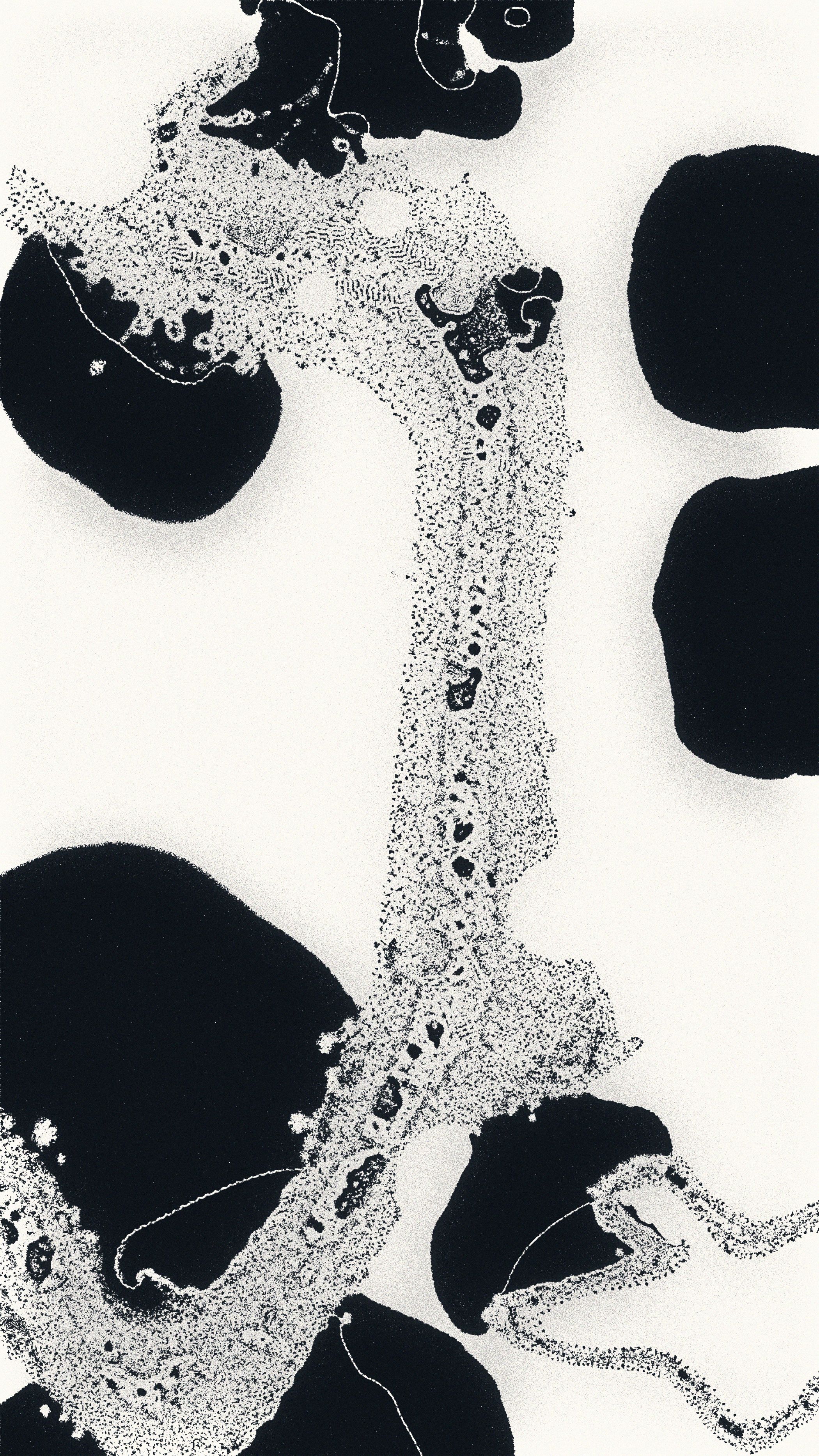
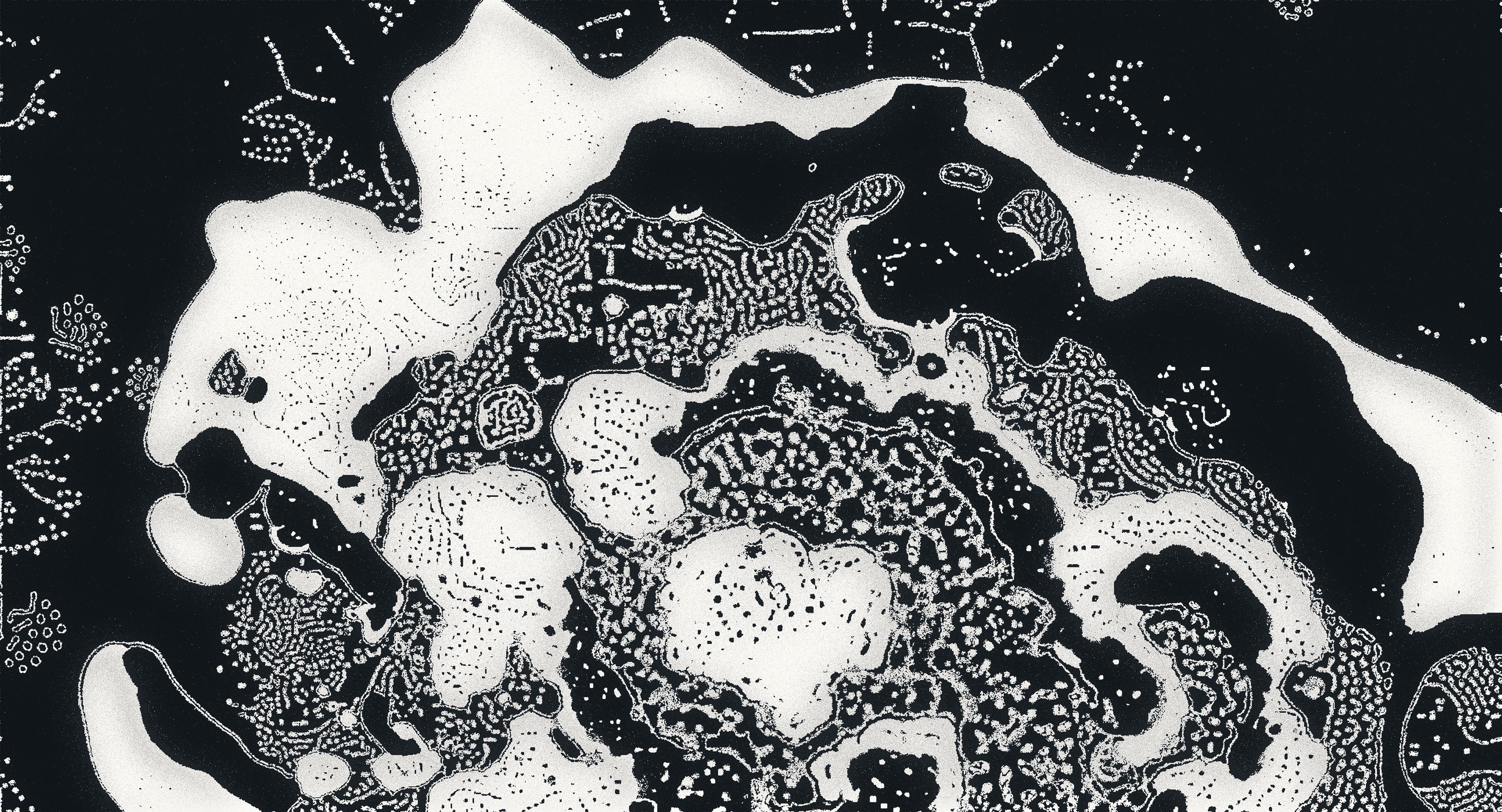
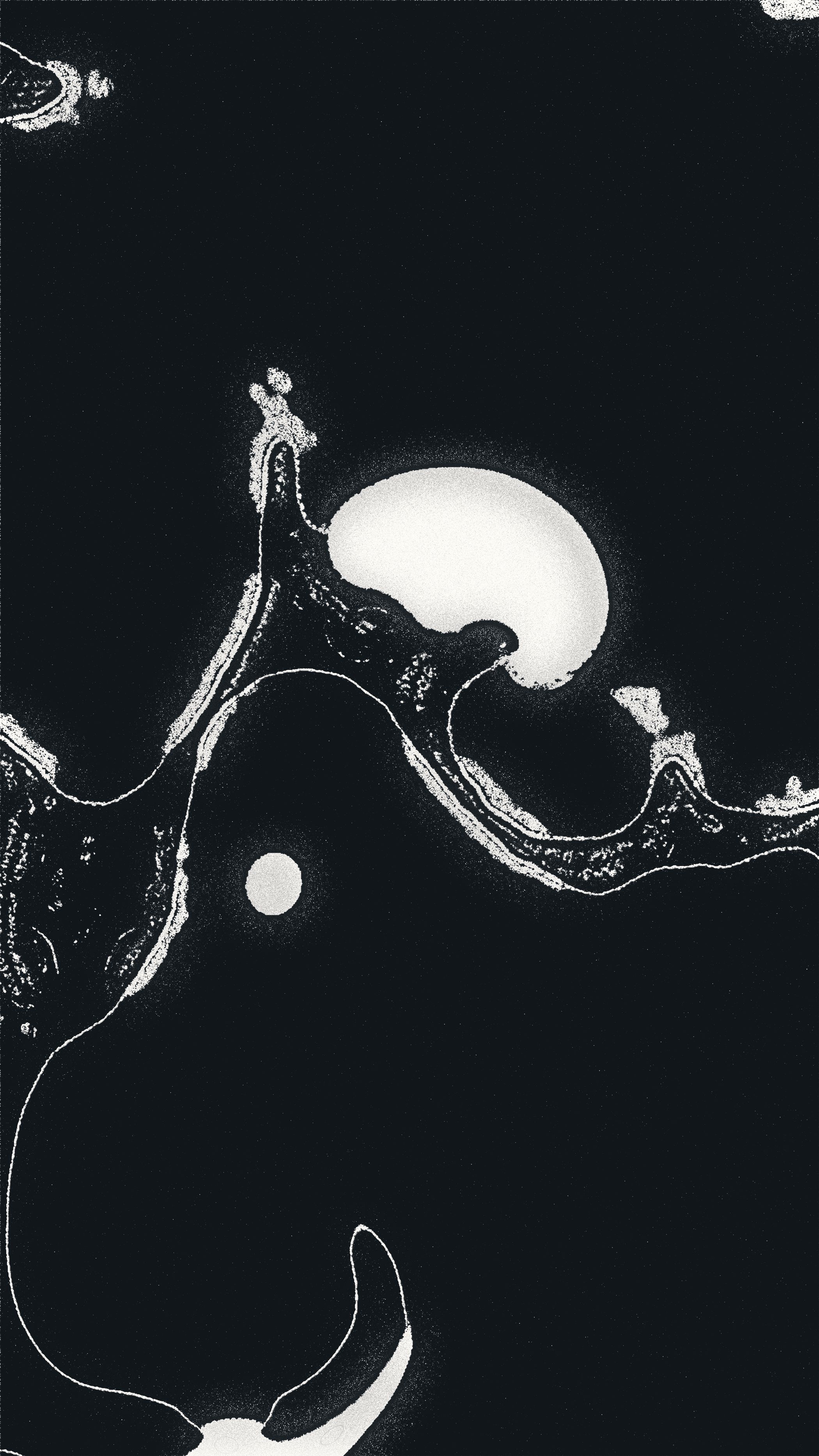
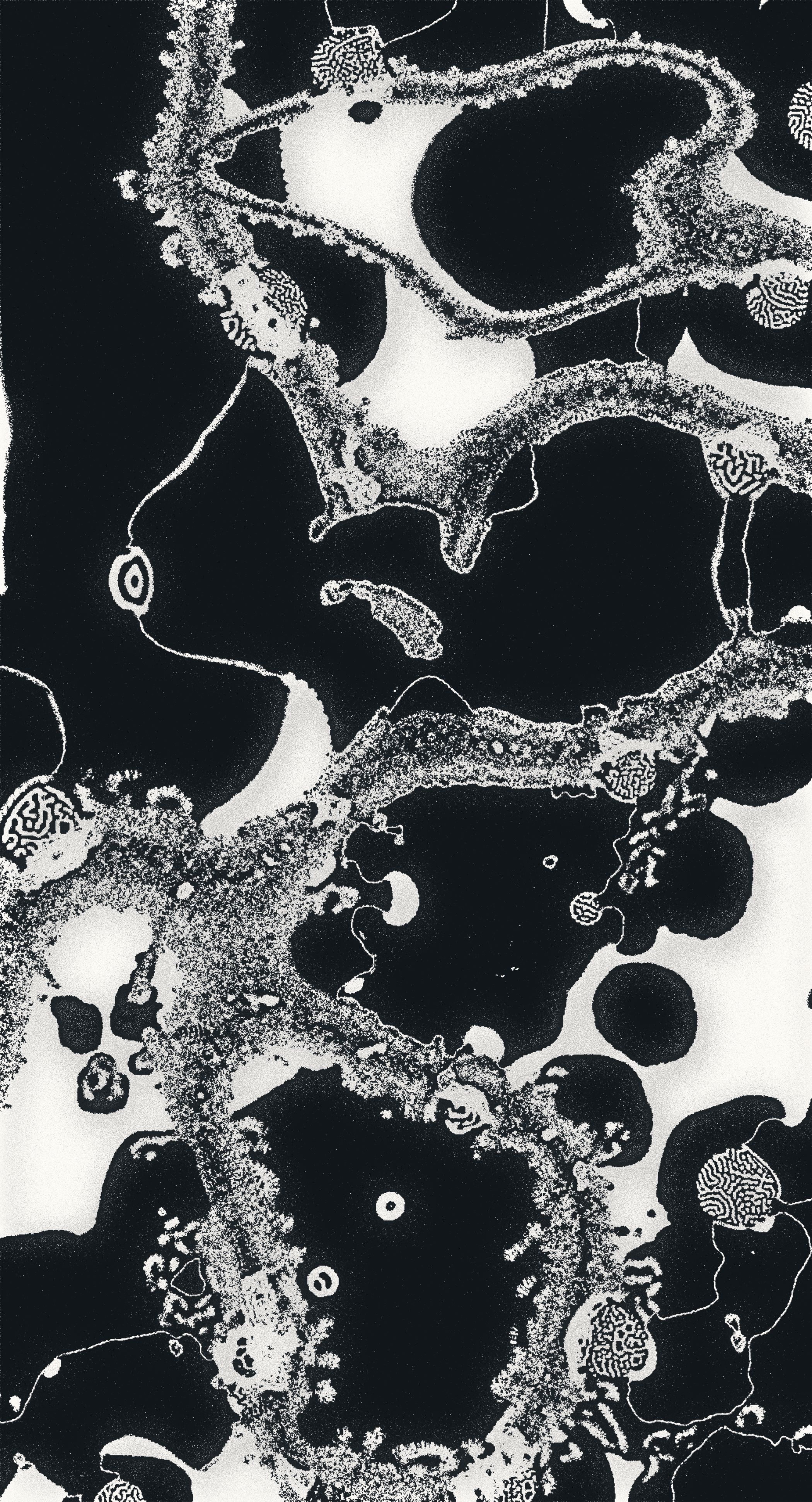
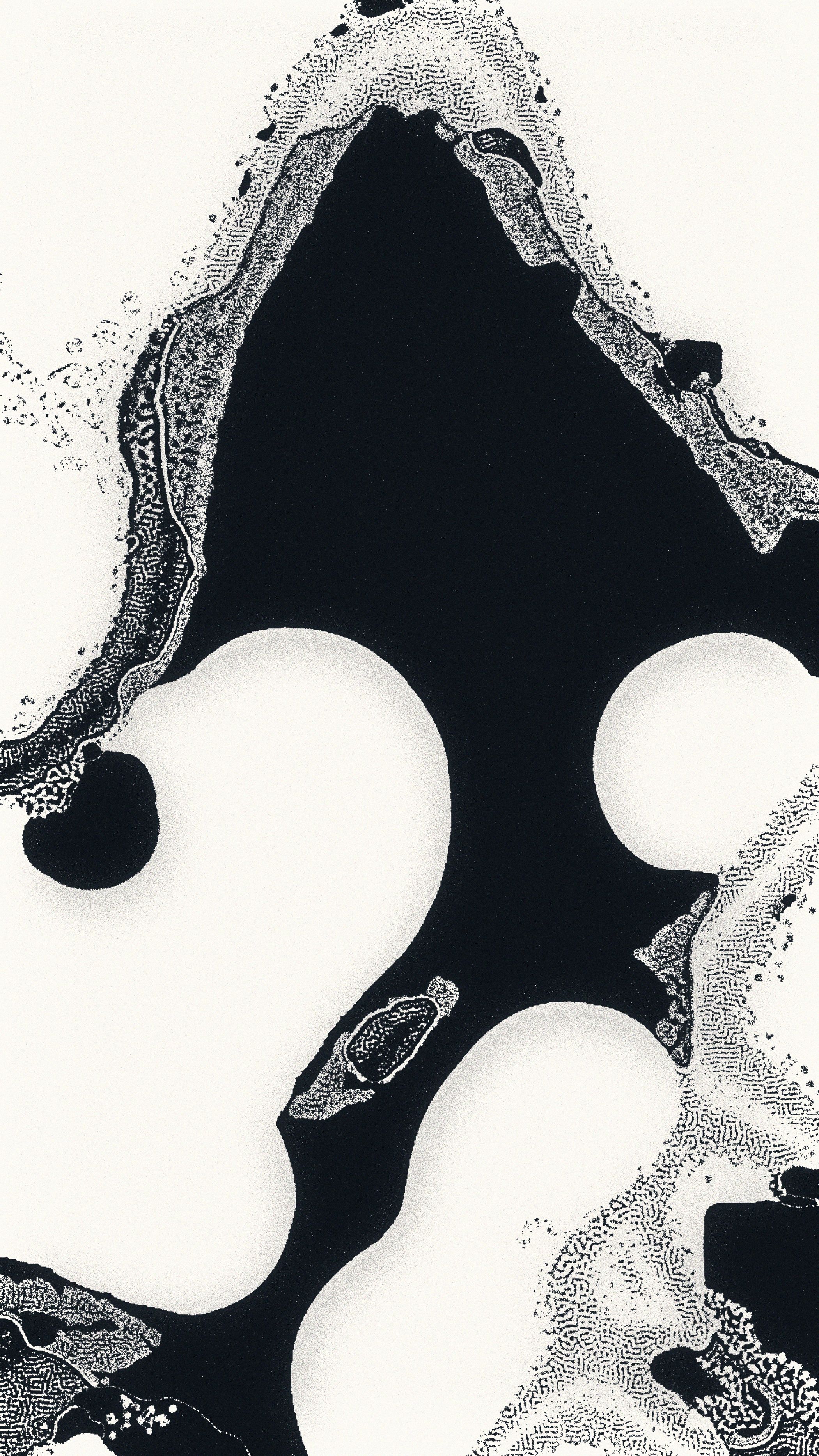
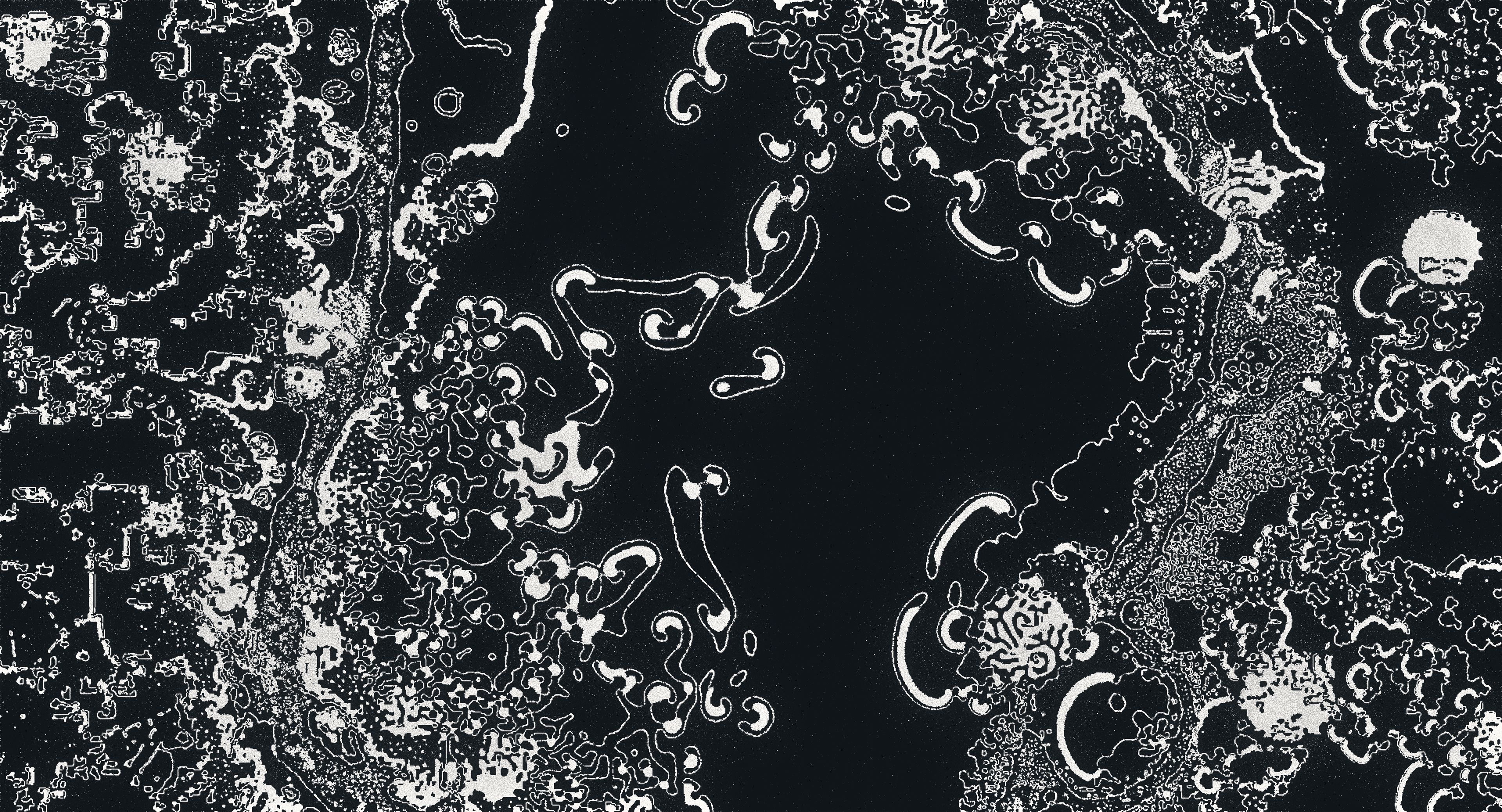
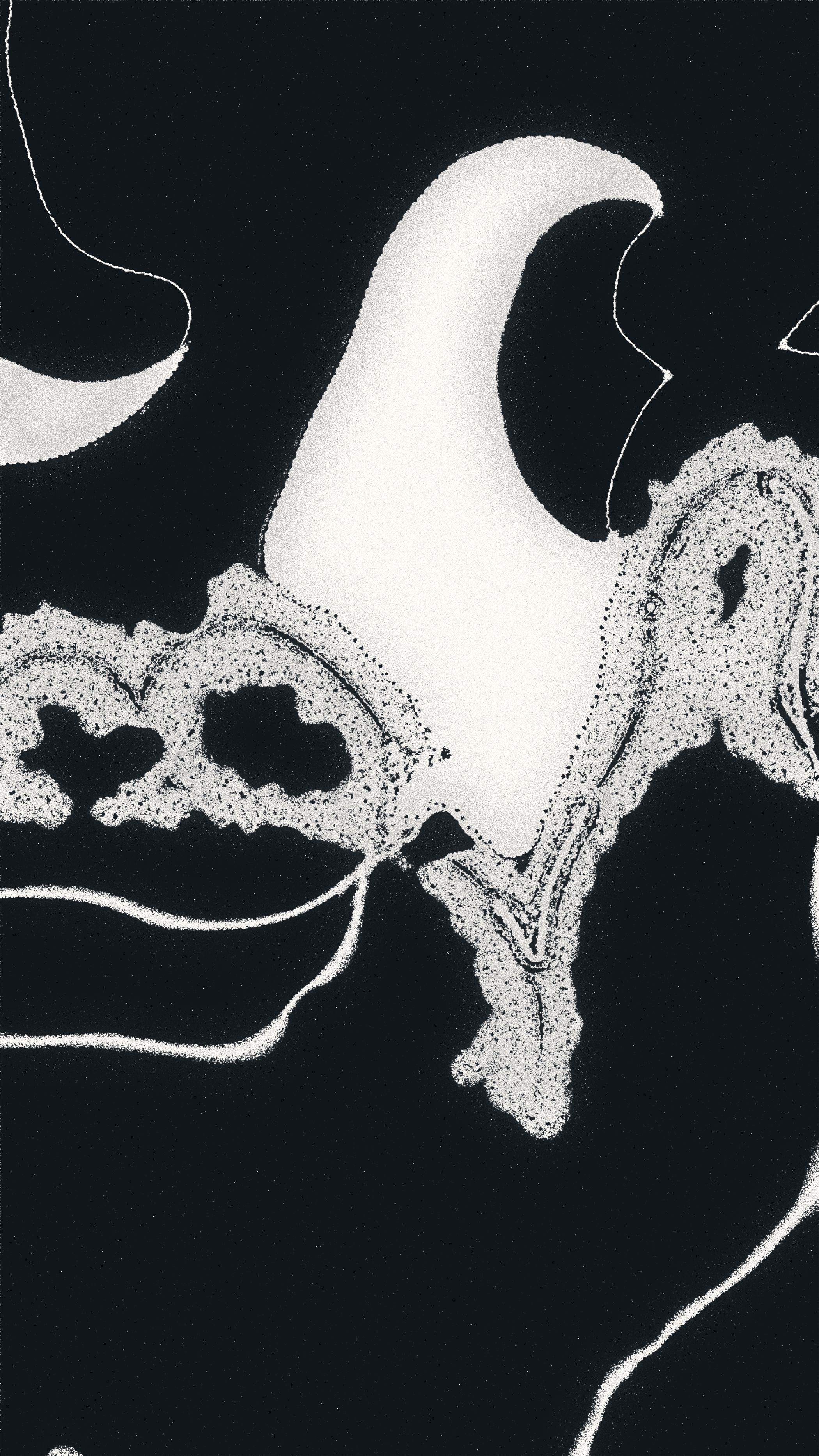
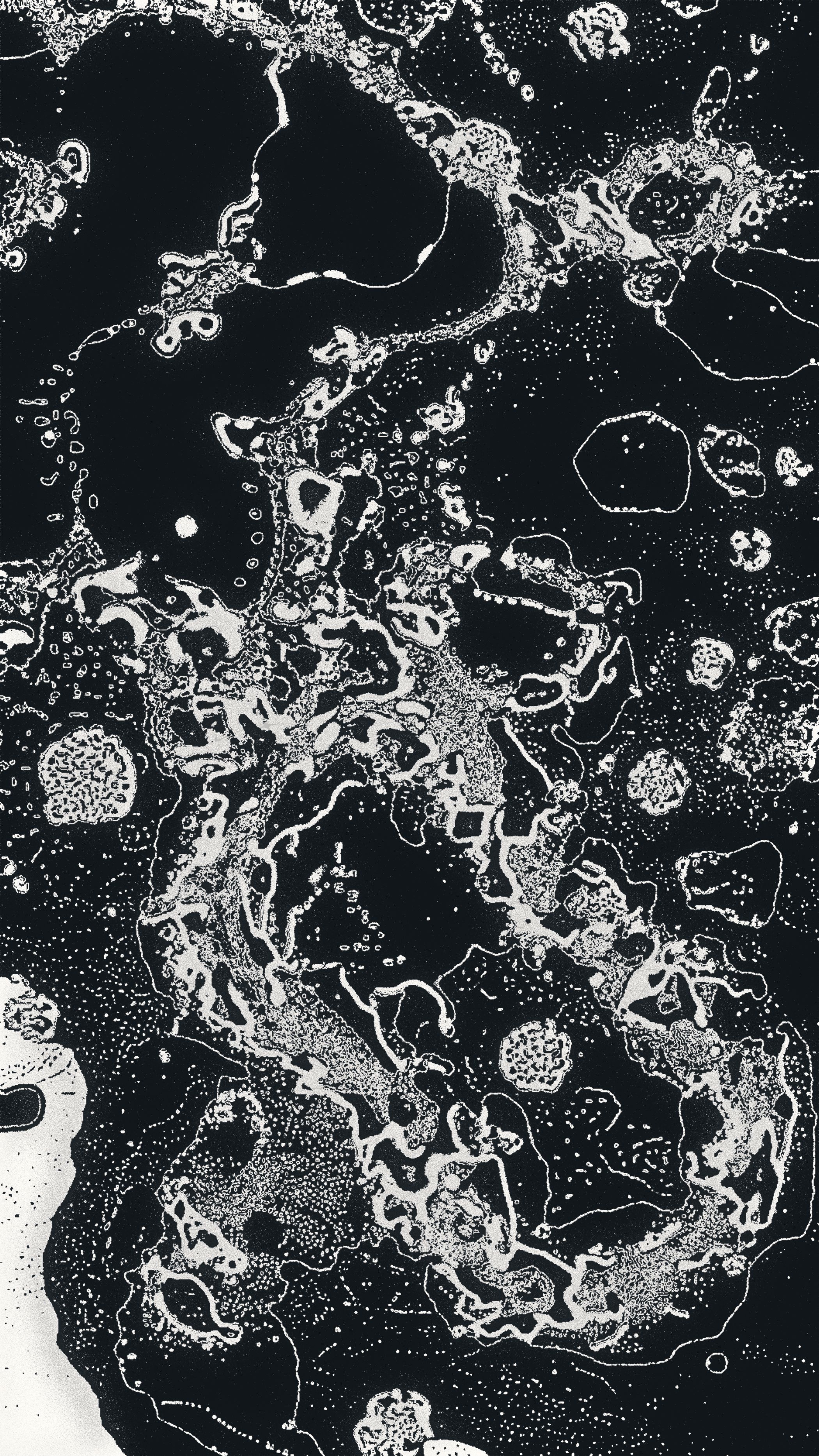
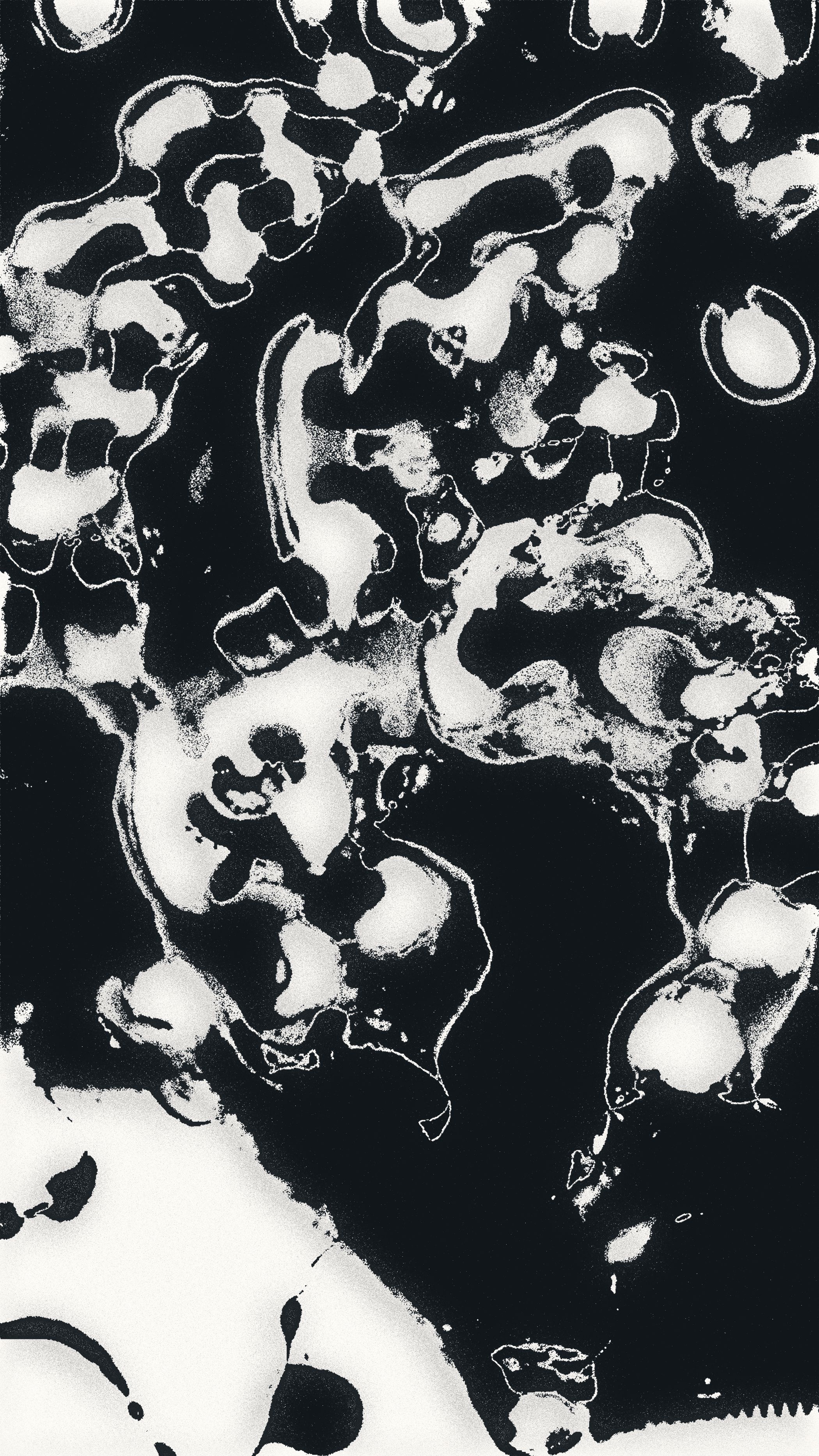
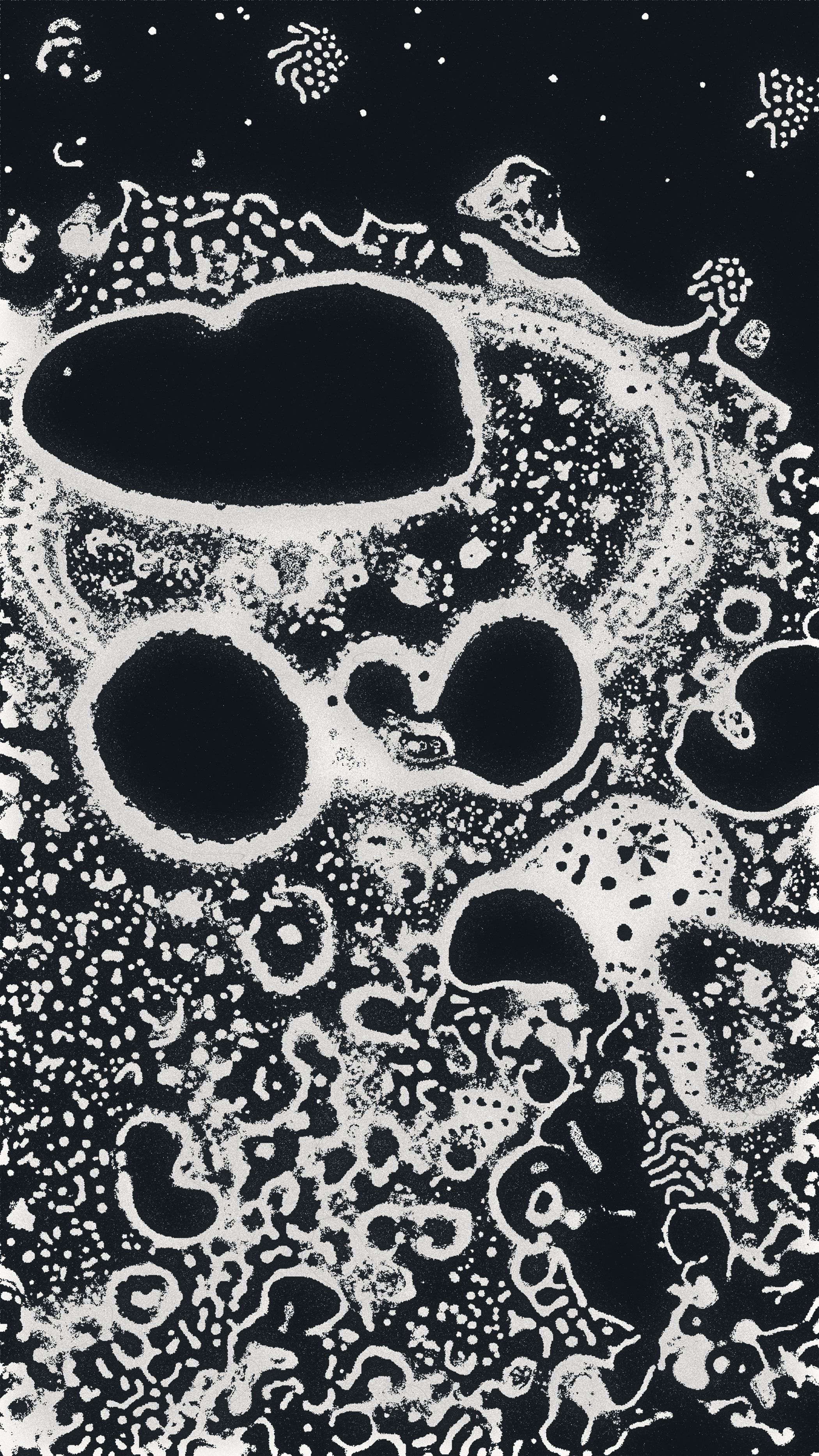
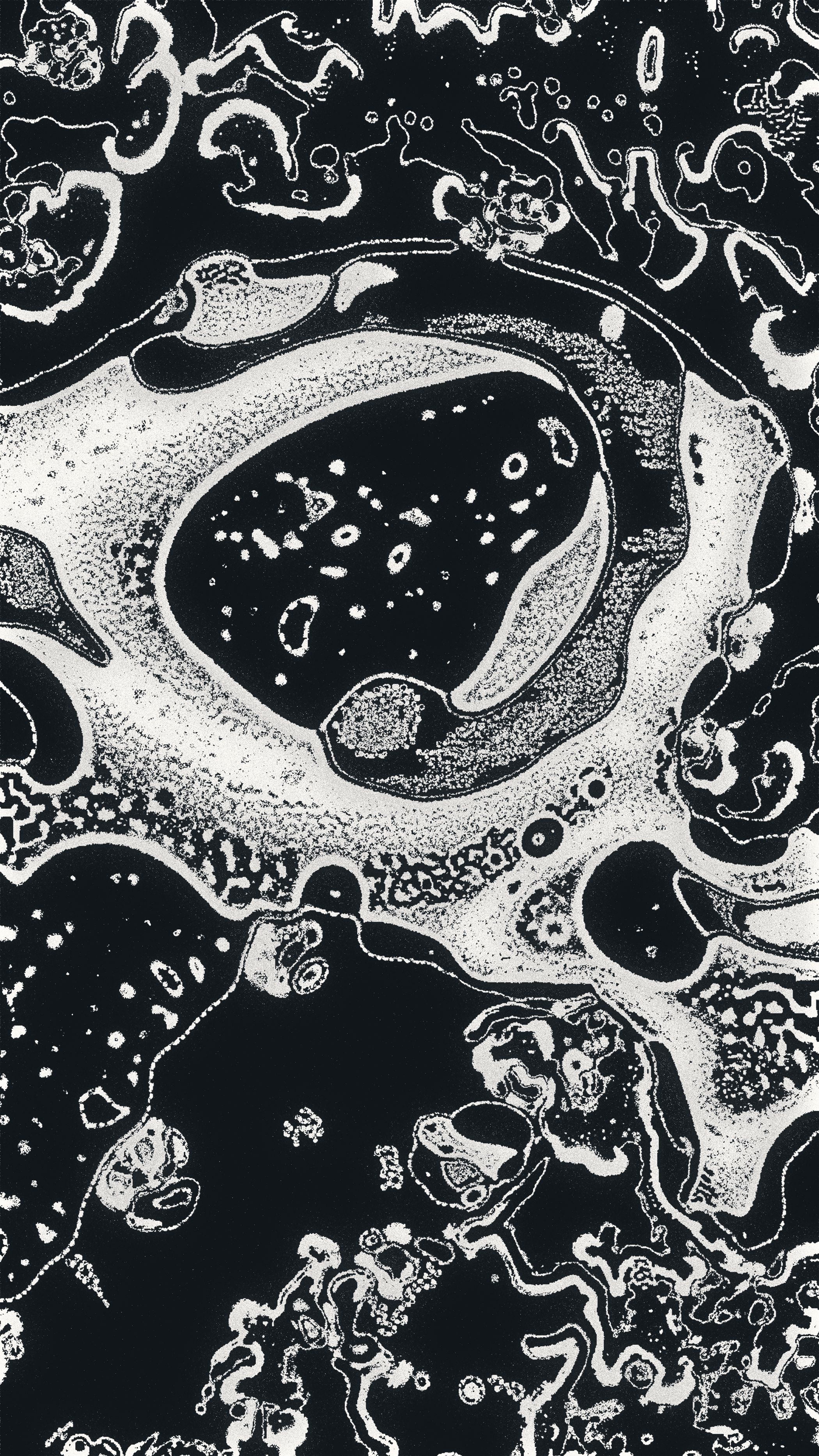
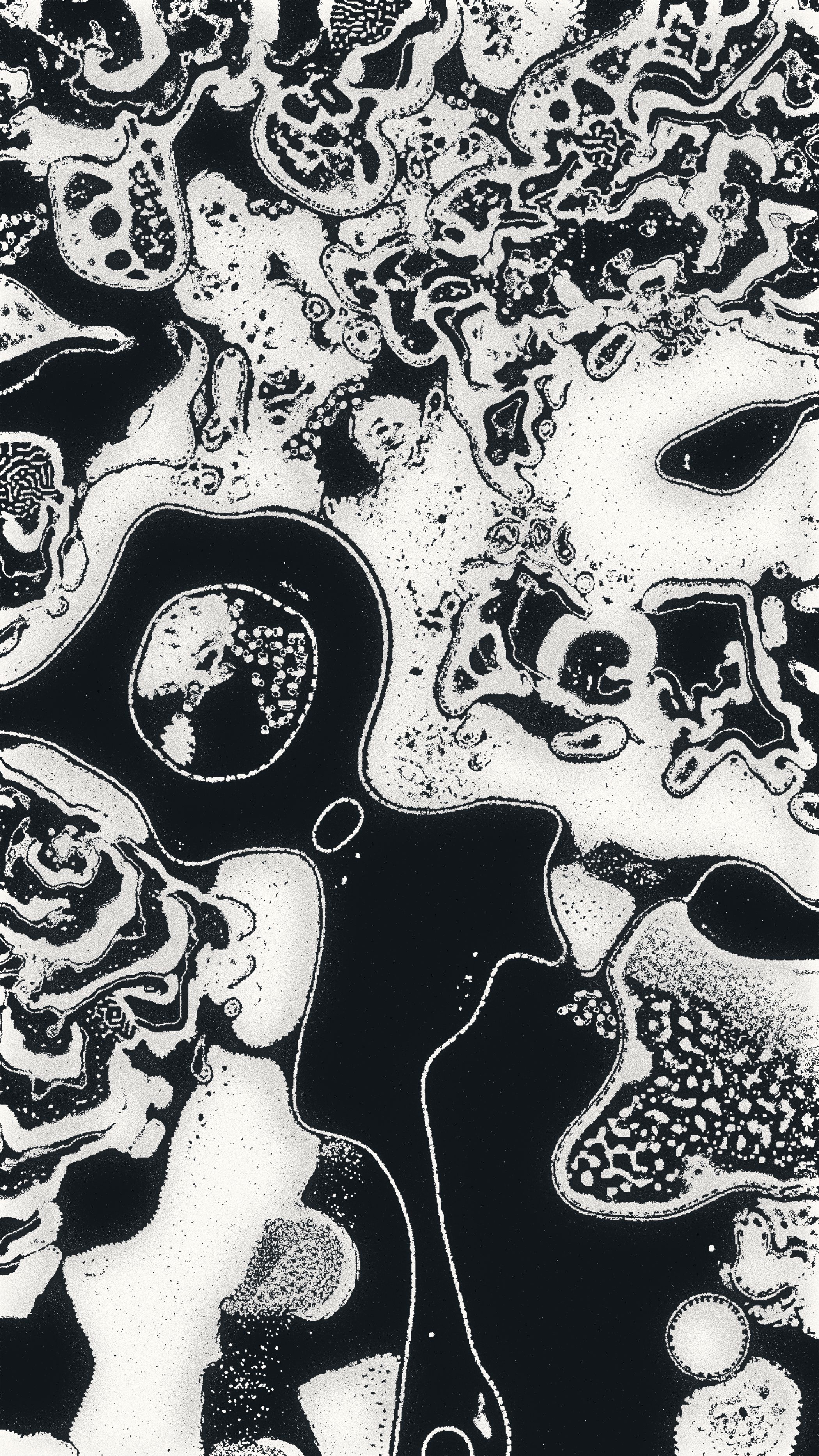
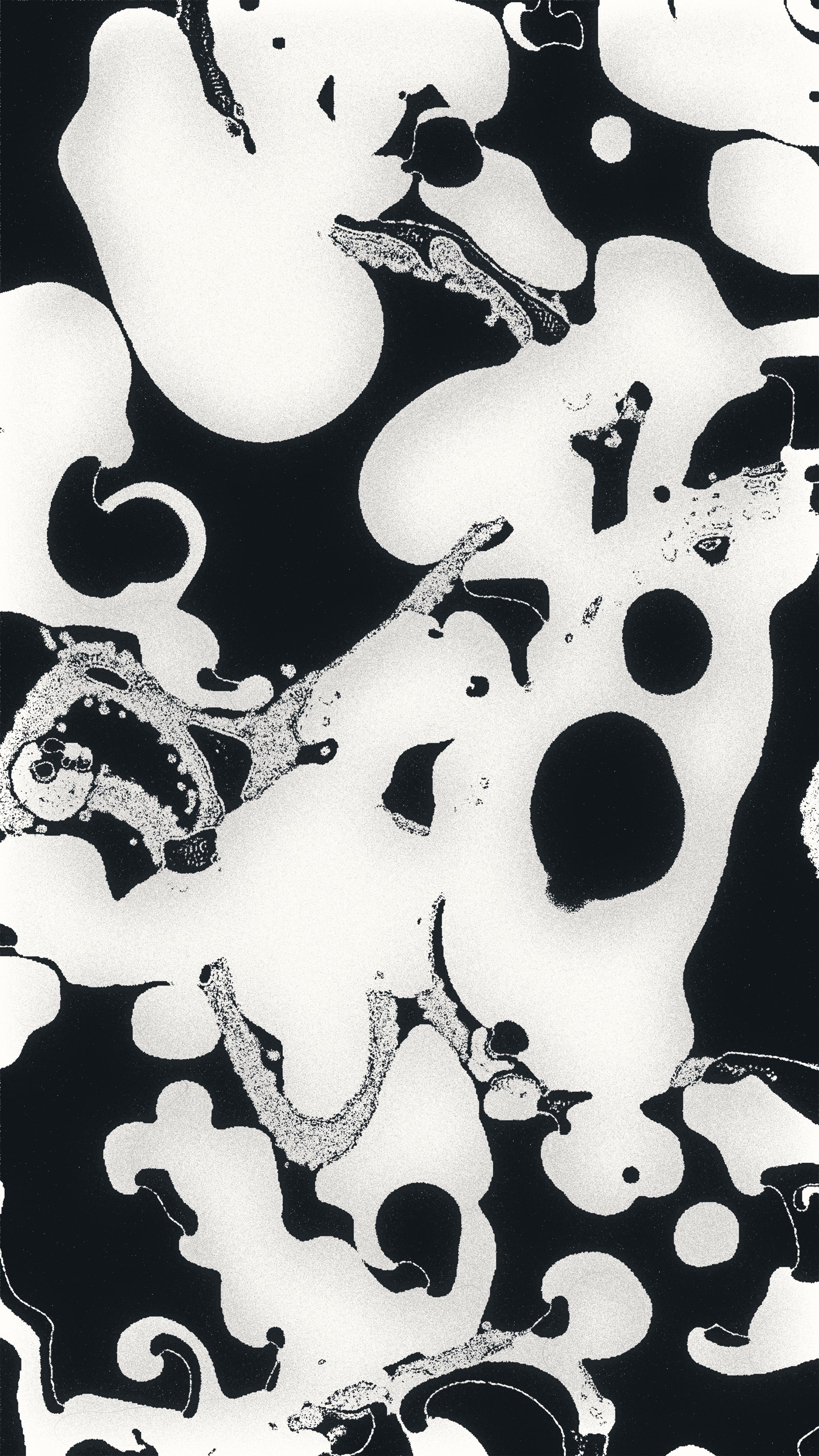
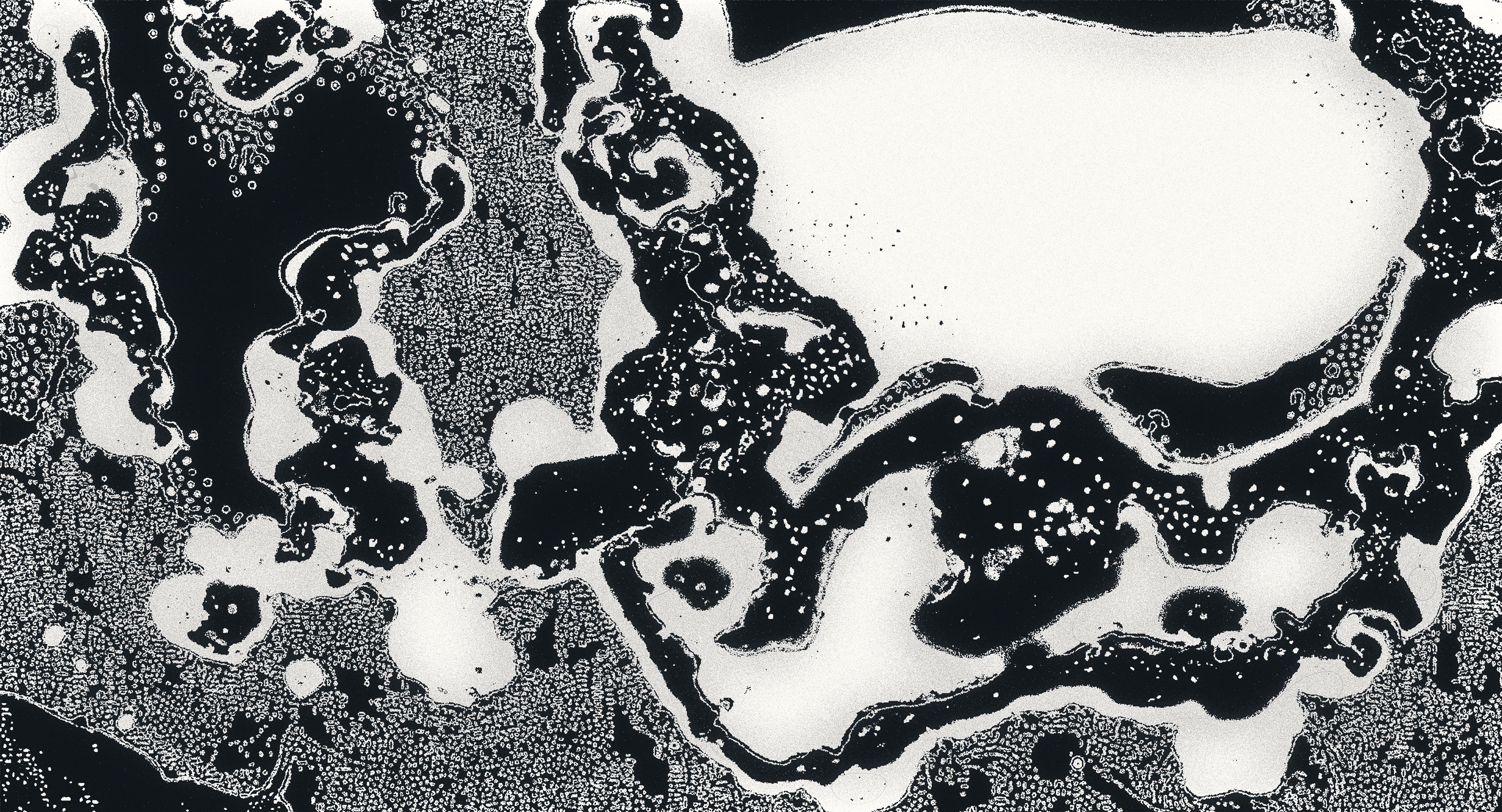
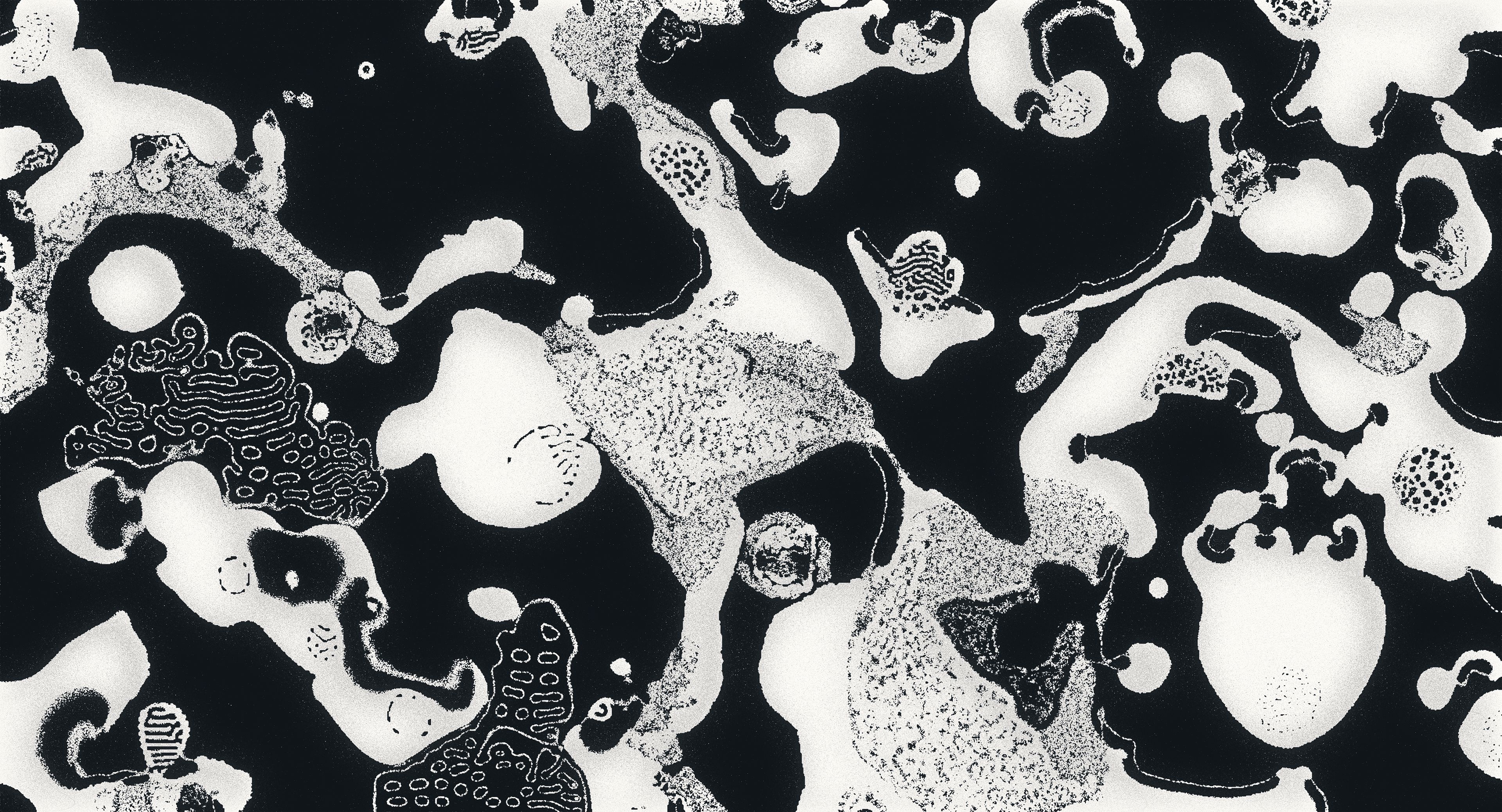
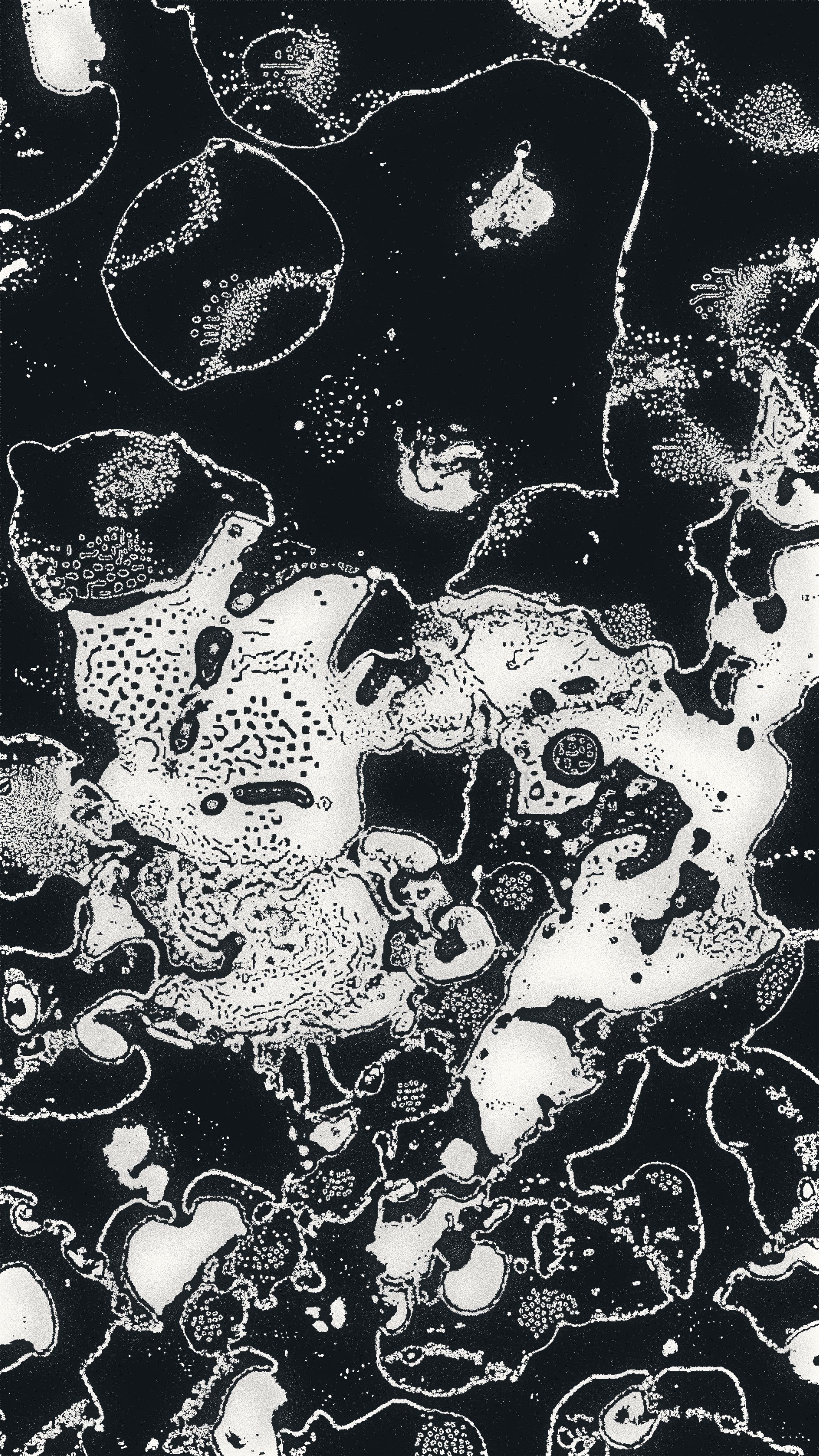
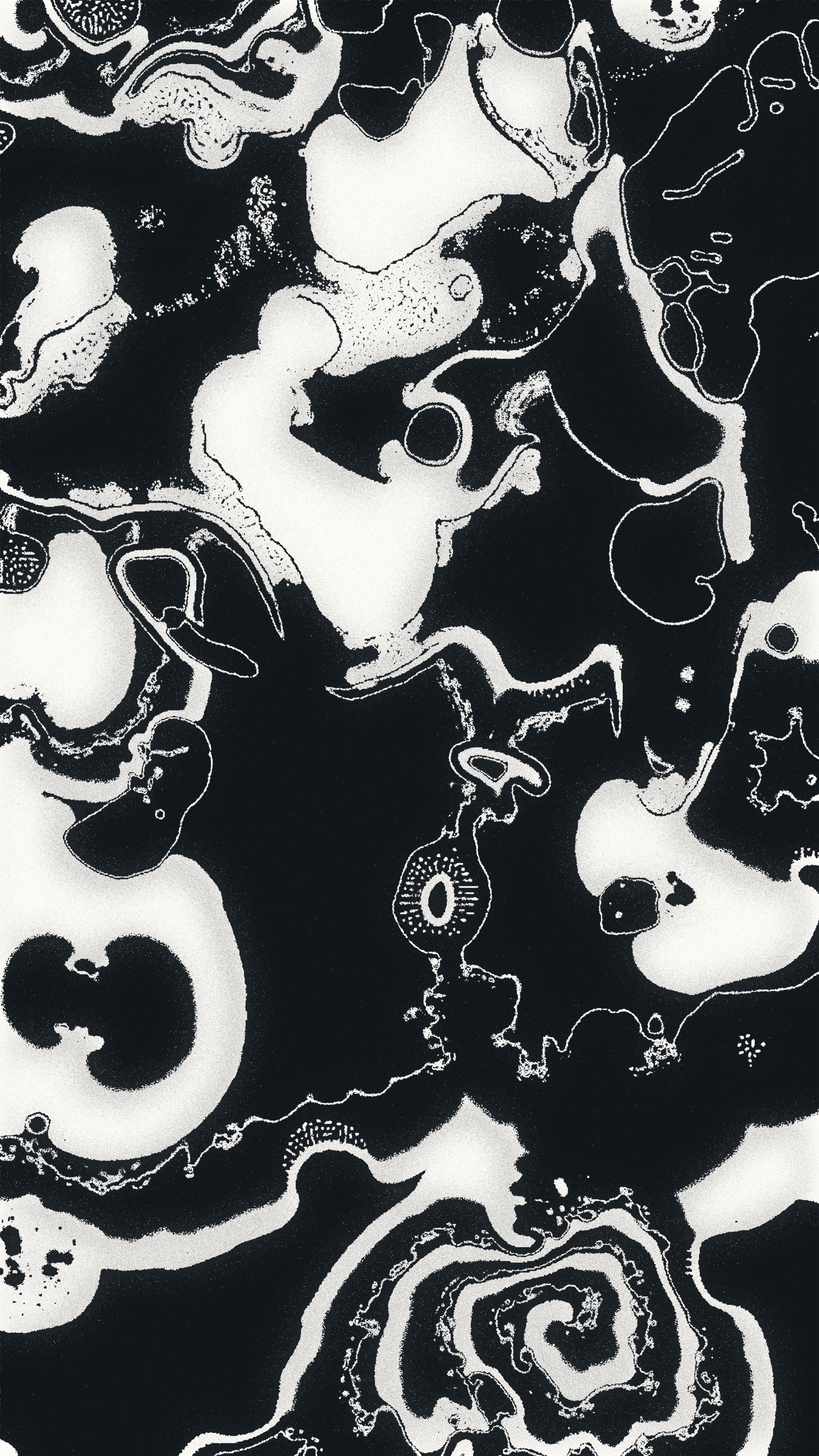
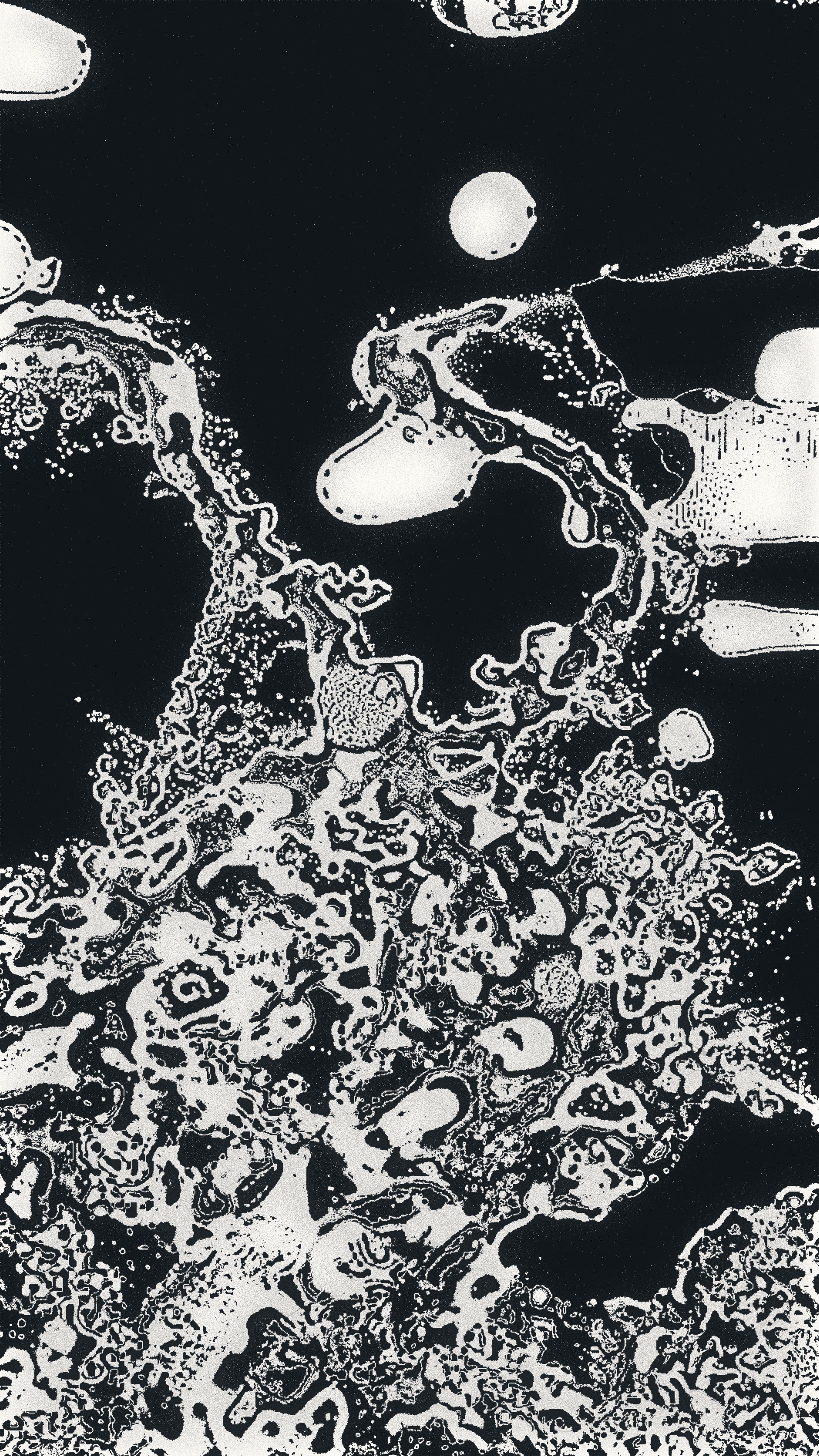
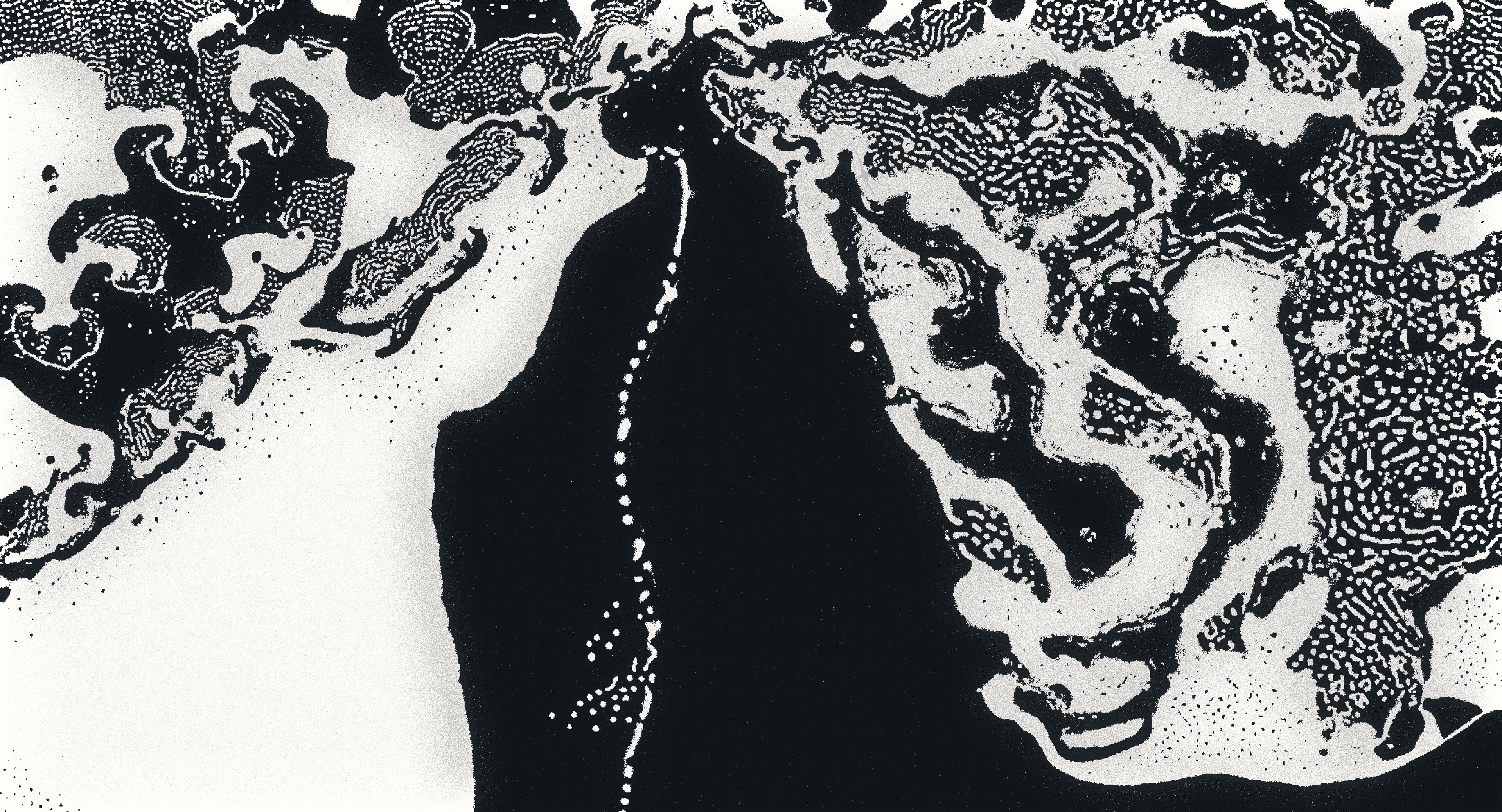
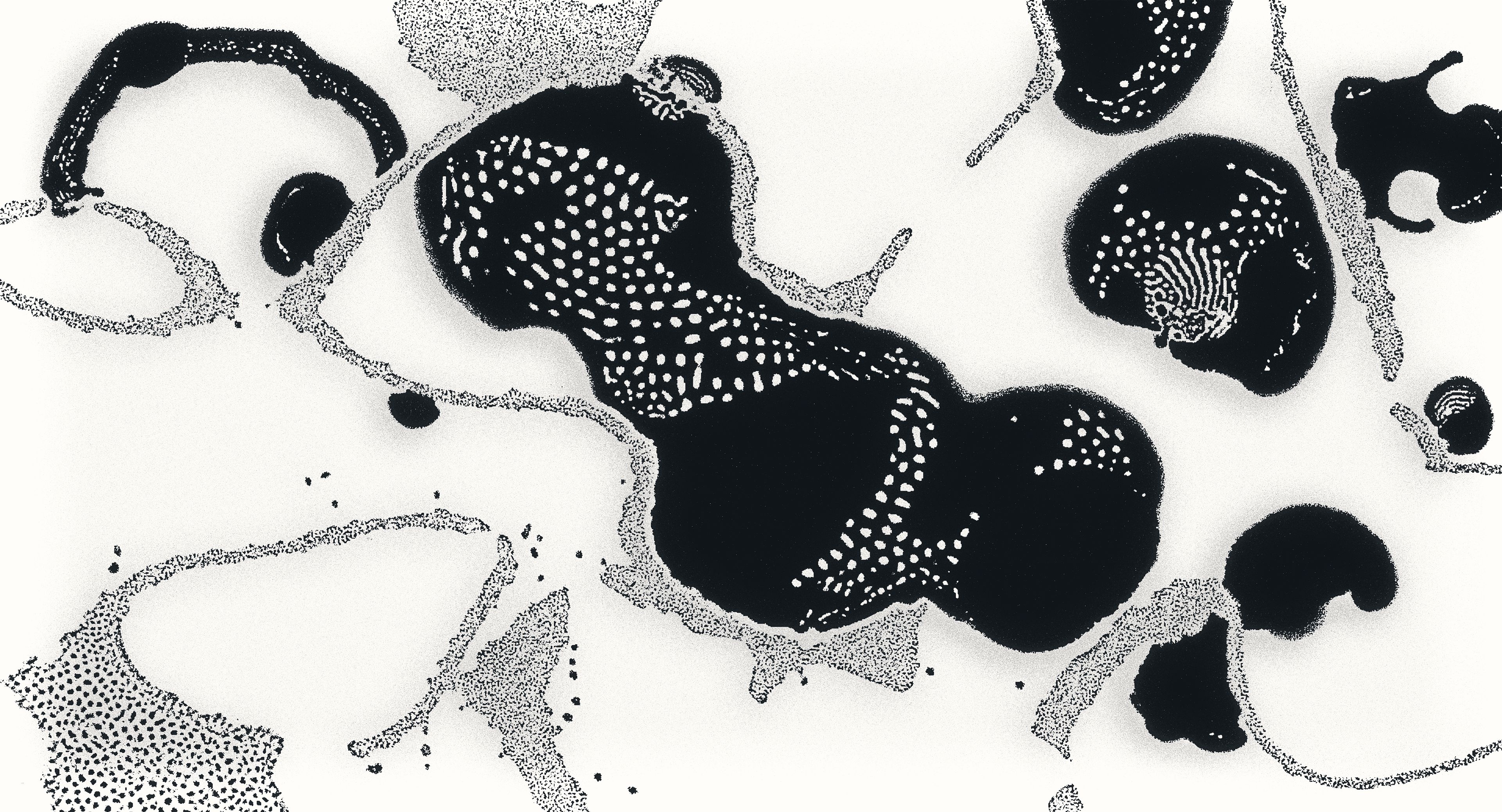
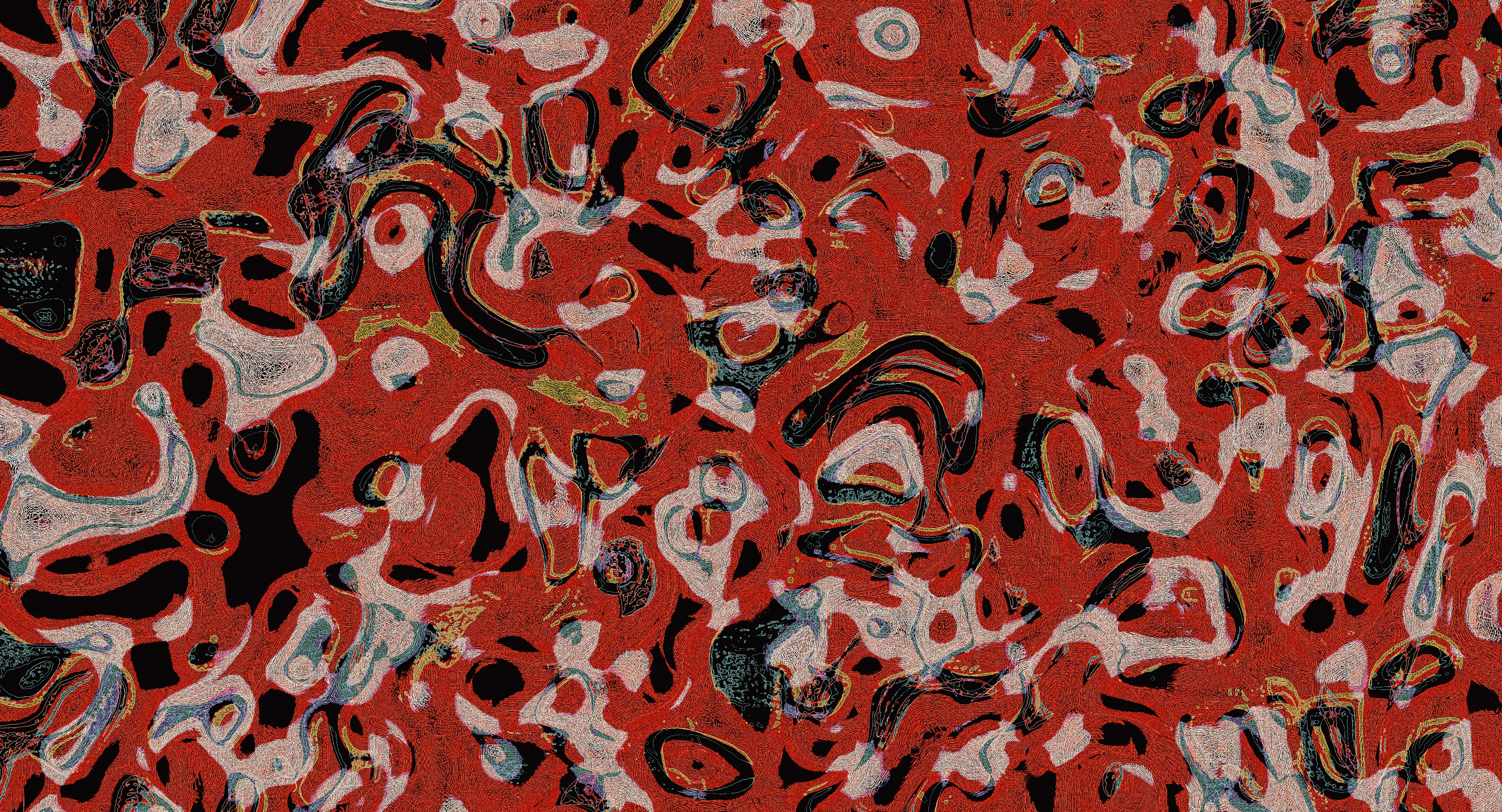
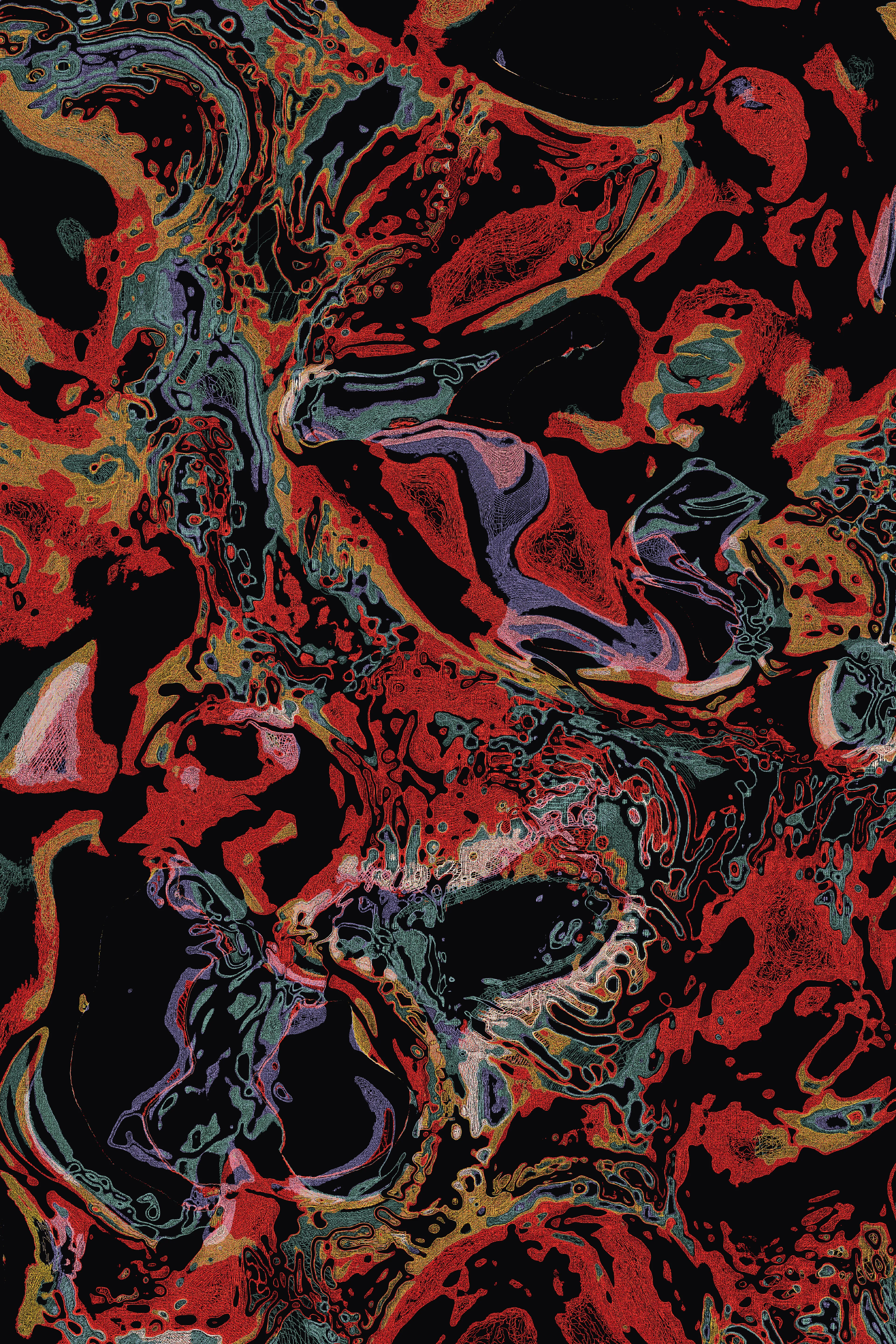
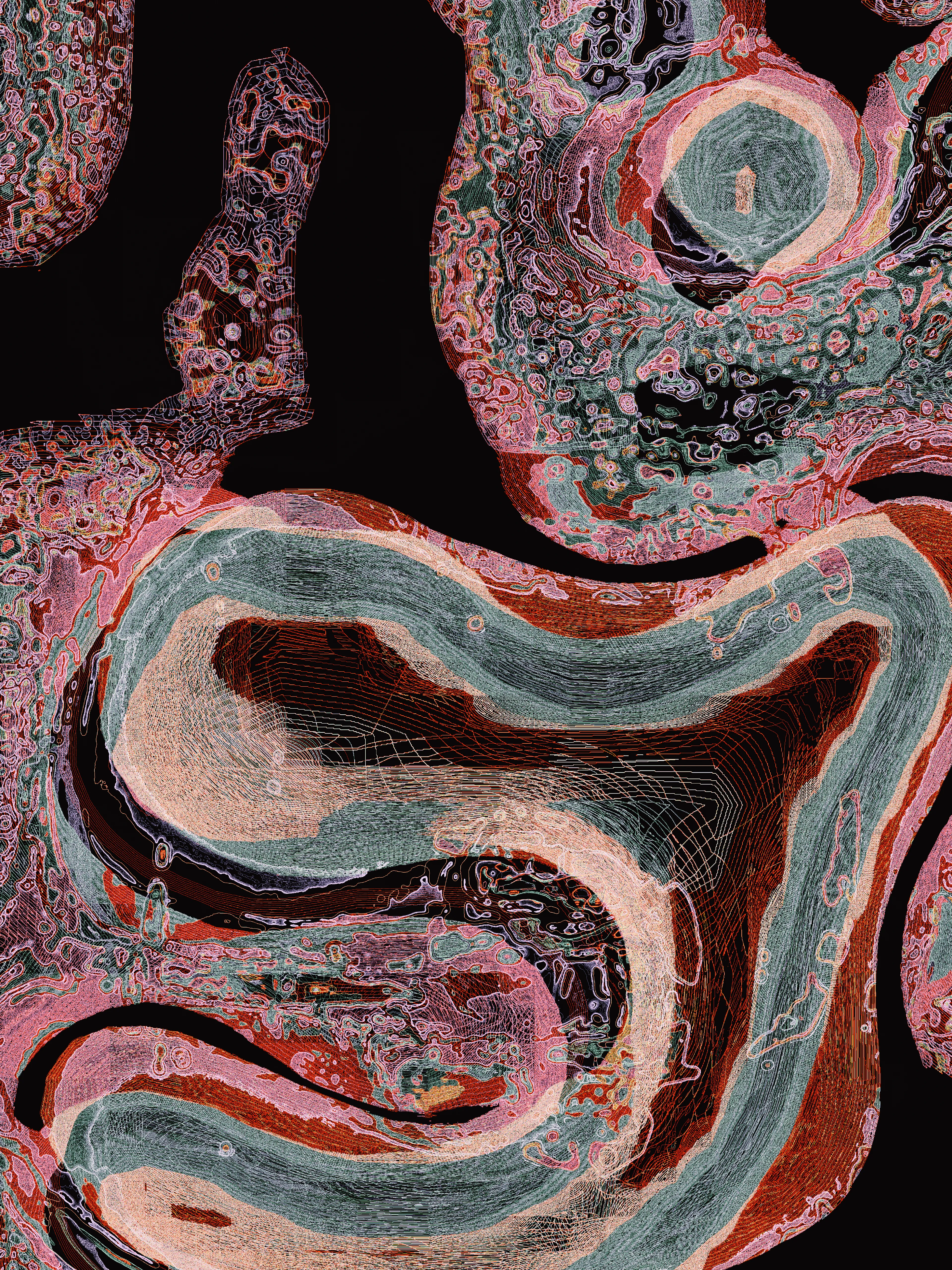
This summer, a commissioned project led me to revisit hello world, a generative artwork I released in 2010. It draws out and intermingles RGBCMYWB, every color that constitutes a digital image, and sets them in motion. Because every color is constantly transforming, there is almost no stable form to speak of in the work; everything is melting, soft.
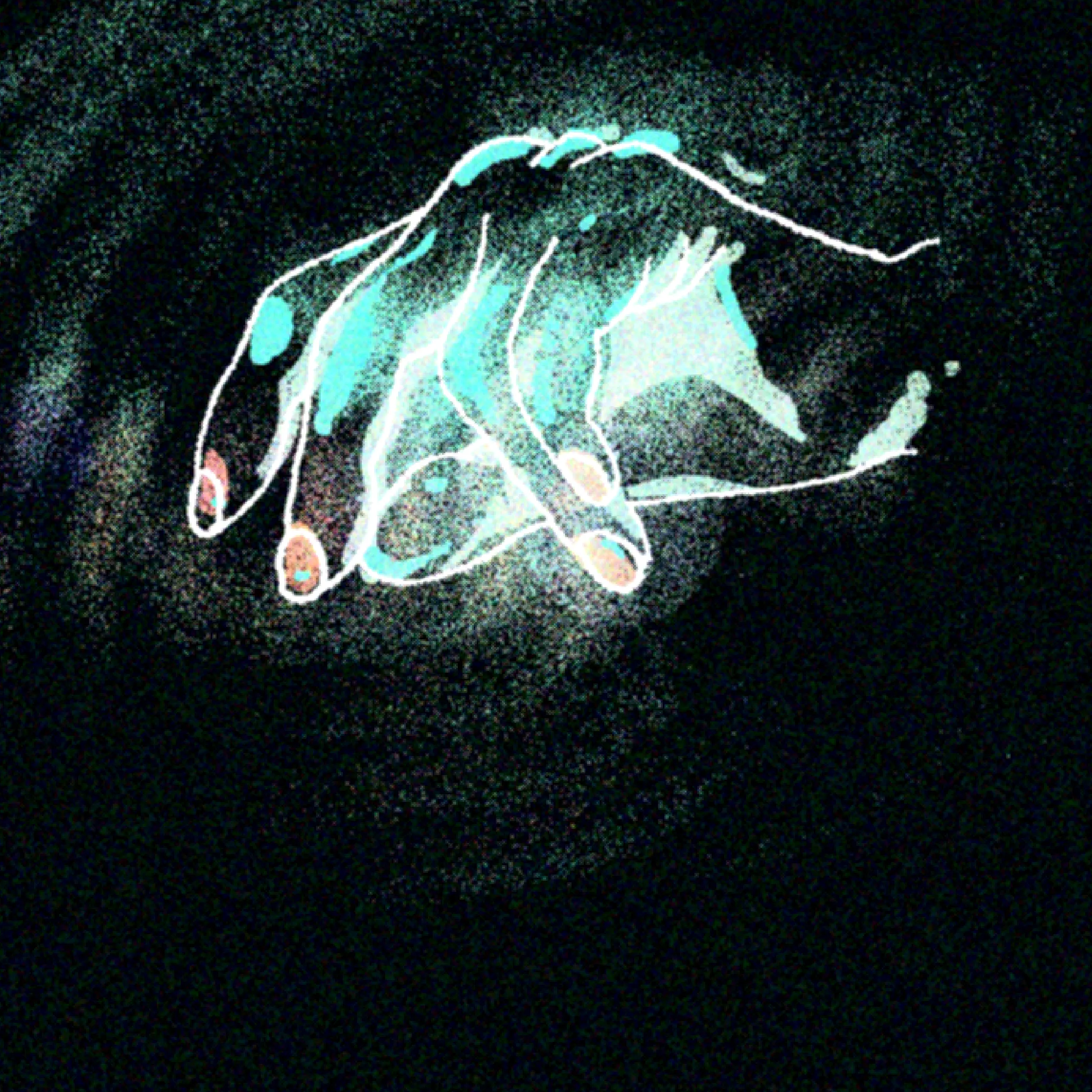
Around the same time, I rediscovered Aubrey Beardsley, whose work I love. I originally discovered a collection of his work at a bookstore when I was a teenager. The contrast between jet-black ink and pure white space was striking, and the subjects themselves were exquisitely detailed, often erotic. I happened to learn of a Beardsley exhibition in Tokyo this year and went to see it. Beardsley depicts a representational world rendered in black and white: sharp and hard with a sense of solid mass and the rugged weight of physical matter.
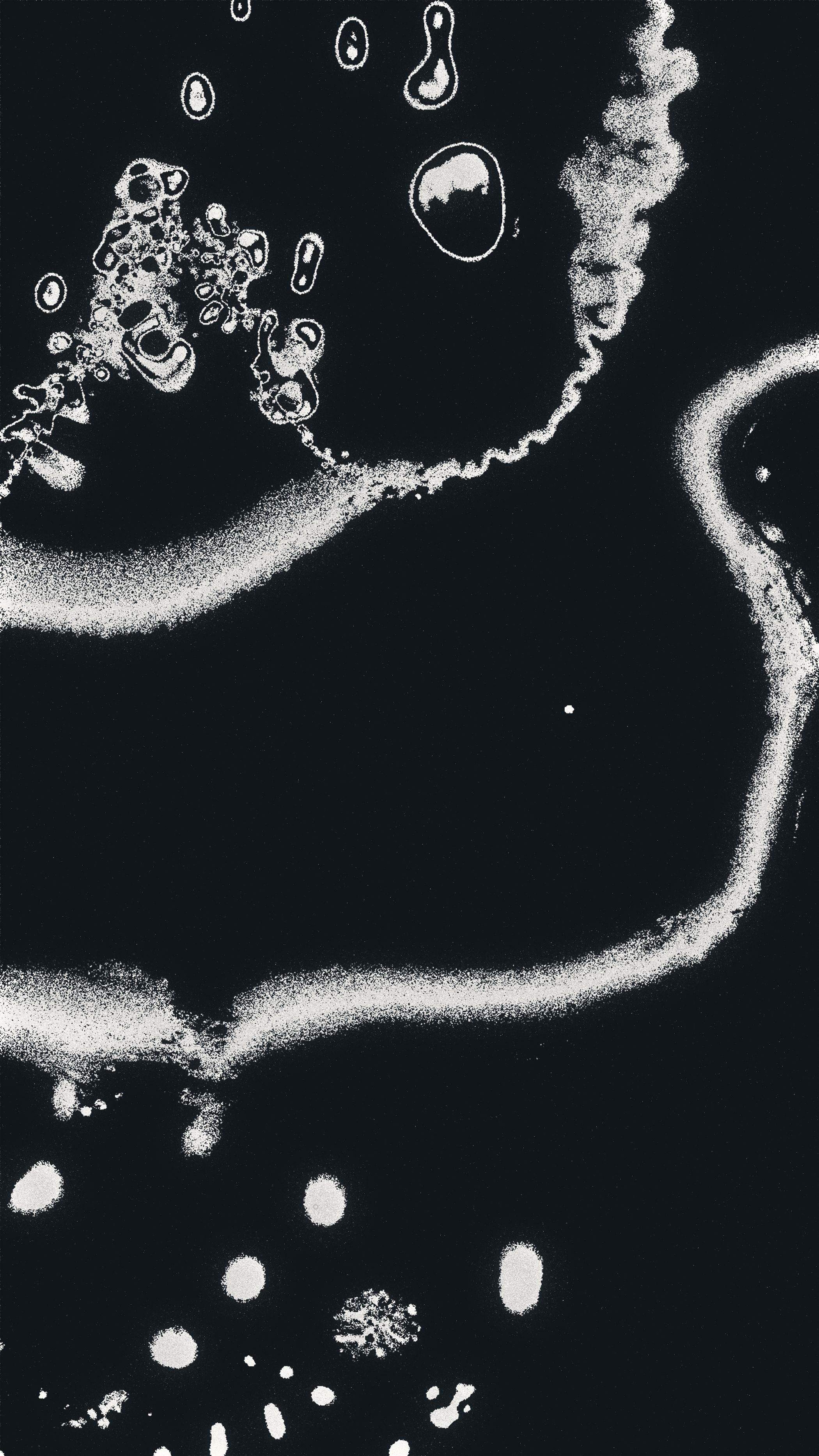
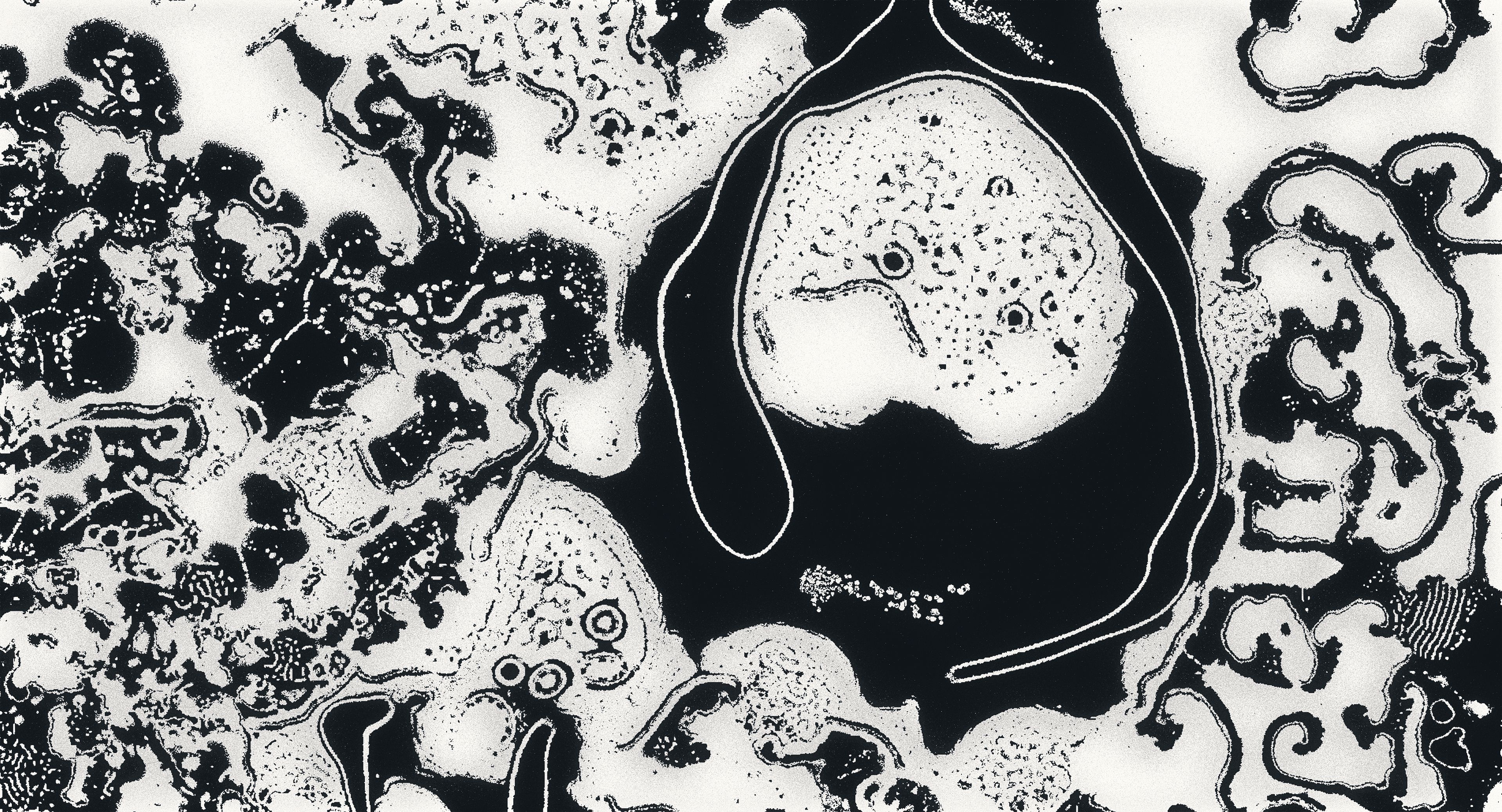
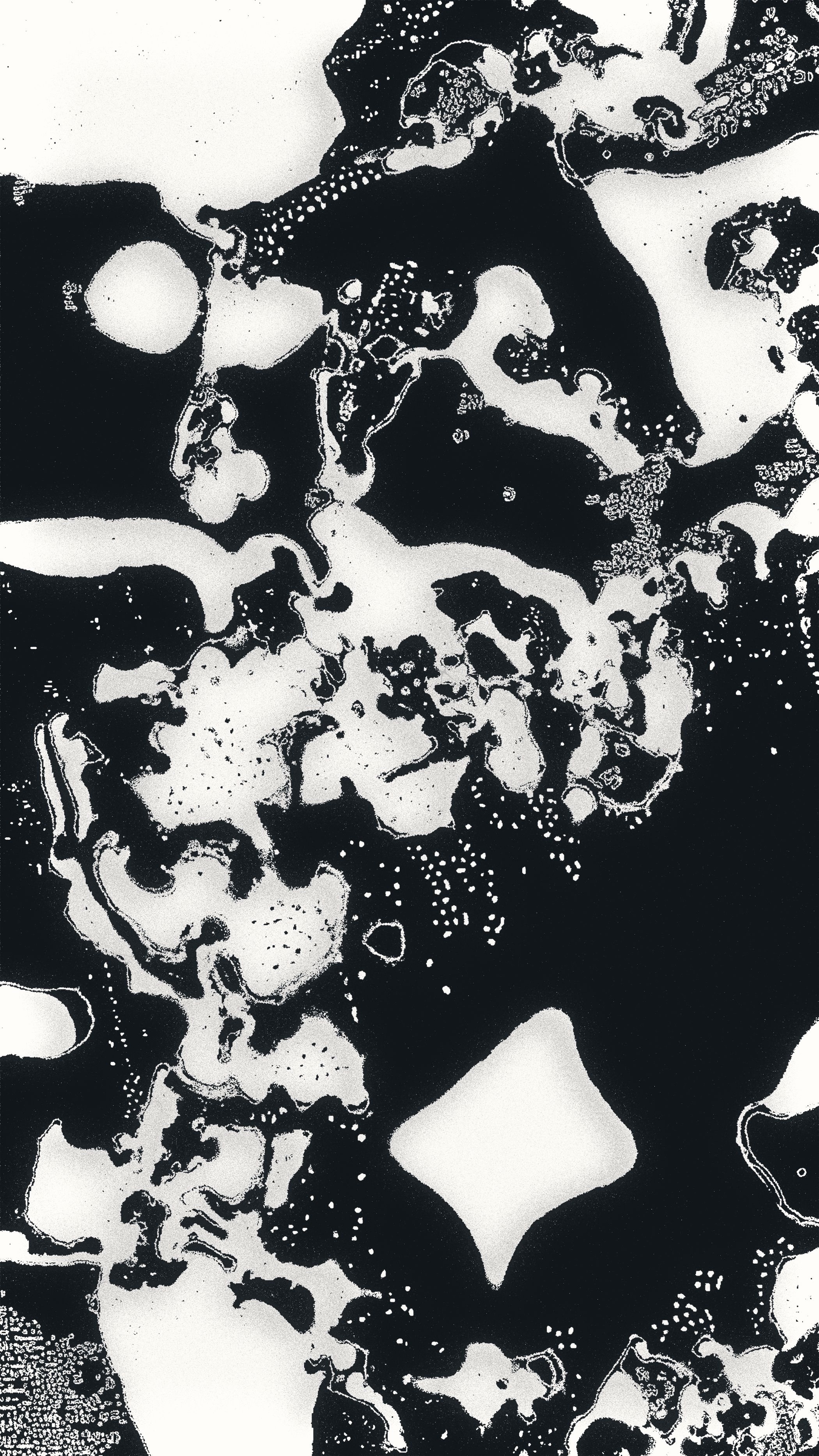
Having received this fresh baptism of Beardsley, I began experimenting: what if I split the rainbow-hued, fluffy colors of hello world into just two, black and white? This meant forcing every color to “choose” a side. Red: black or white? Green: black or white? Through this process, the entire composition transforms dramatically. Perhaps this is what it means to sort things once and for all.
The black-and-white worlds that emerged were often frightening. Grotesque, even. Some were too disturbing to show anyone. It is strange how the representational world becomes so mysterious and sensual when rendered in monochrome, yet the abstract world can become frightening. I find this curious. Left alone, they would remain frightening. There is nothing wrong with that, but it felt too easy.
This reminded me: as a teenager, I worked with microscope photographs. Watching creatures shimmer in a single drop of water is beautiful. In reality, they glitter as they ceaselessly devour one another. The same happens in the ocean. Everything grotesque that occurs beneath the sea is beautiful. With these thoughts in mind, I turned back to the monochrome world. What had felt like a gaping black void suddenly became "water." Could this eye-like shape actually be a flounder? A crab? Could this cluster of granules be a coral reef? The motif stays the same, but a change in perspective alters the entire landscape behind it. It may sound simple, yet the scene becomes something entirely different.
From that point on, I acquired a new "eye" — the world of water — and spent some time exploring various outputs through that lens. This series presents 30 works carefully selected from that exploration. I have titled this series 水図: Water Studies. In Japanese, it is pronounced MIZU-ZU. Any resemblance to MIMIZU — “earthworm” — is coincidental.