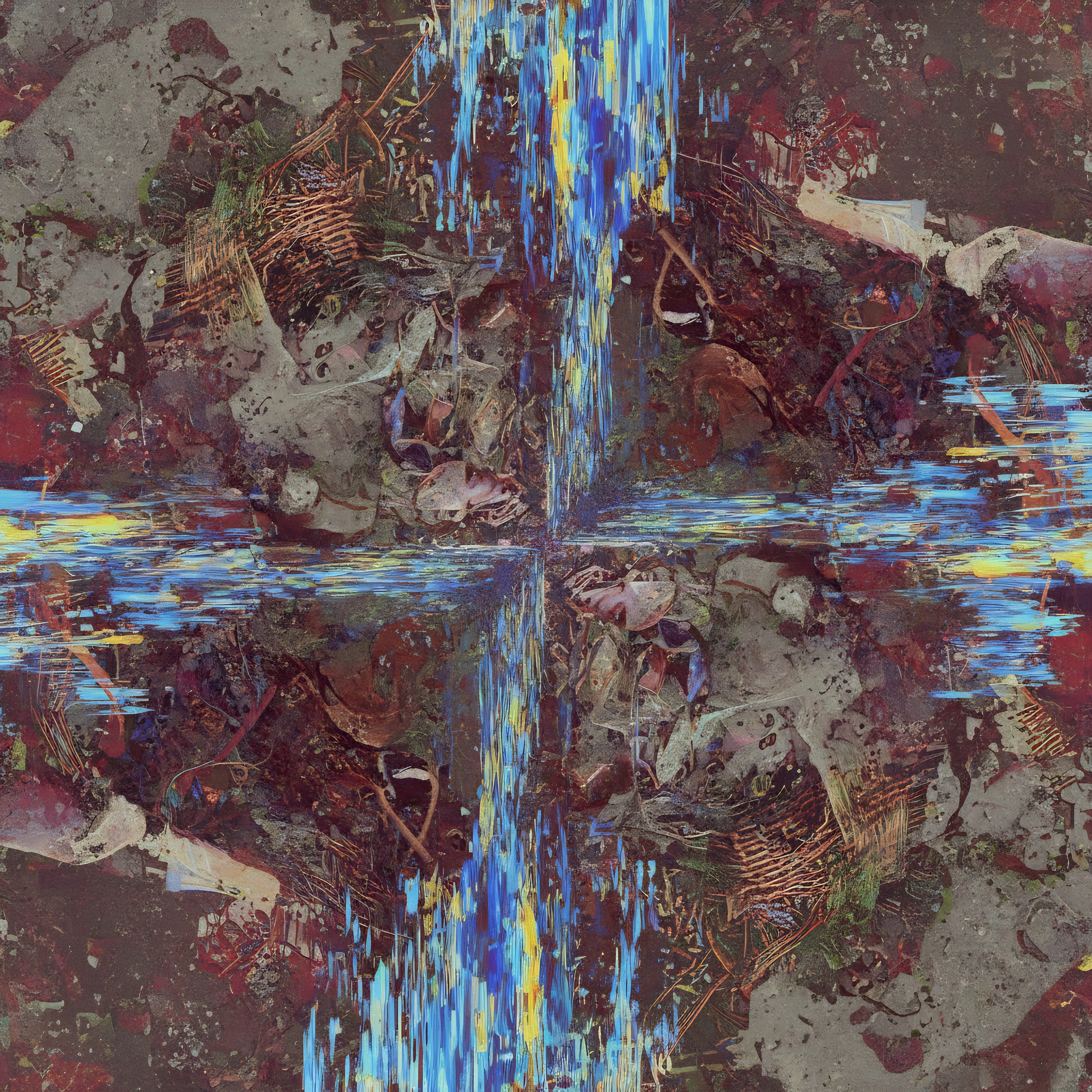
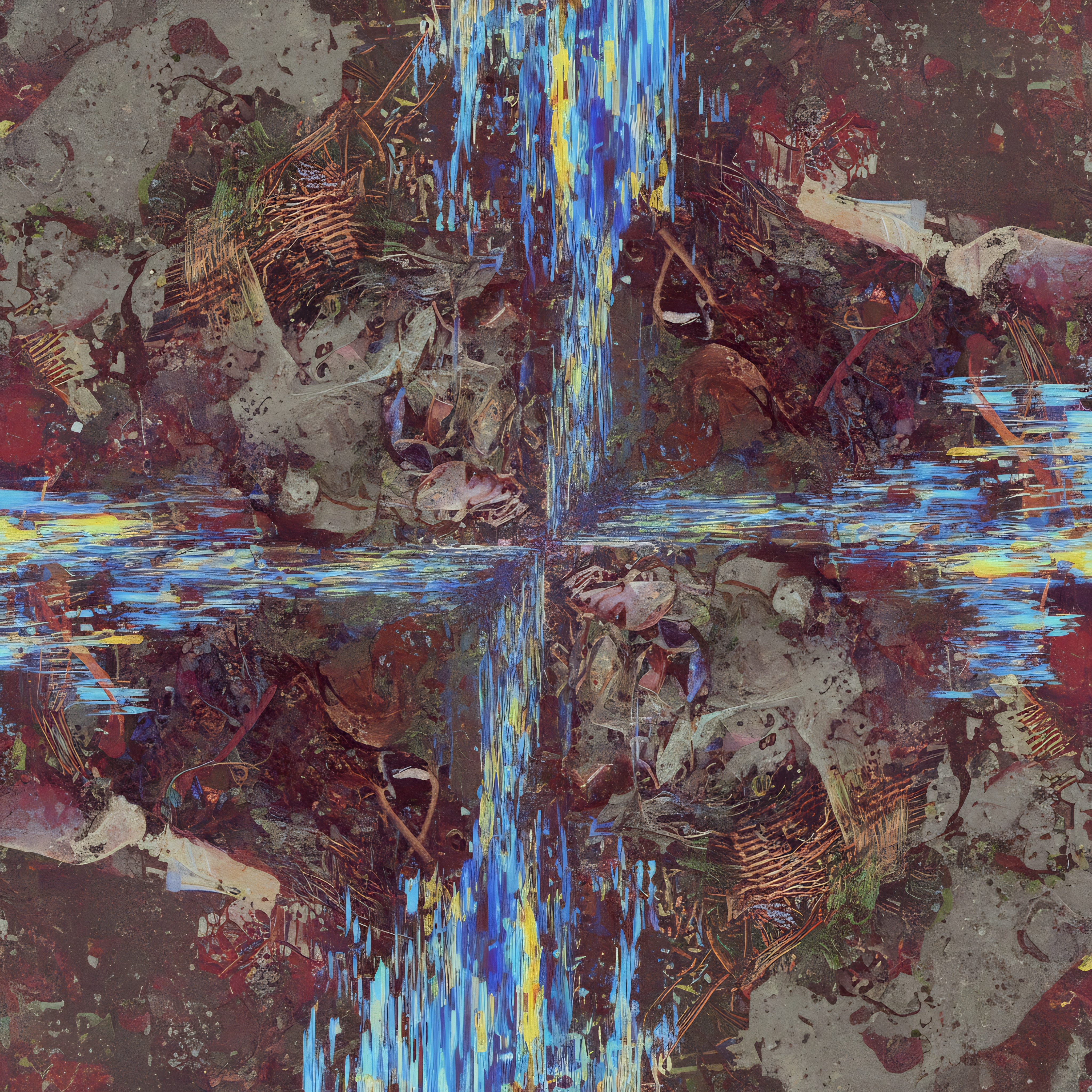
January #001. This image emerges from an investigation into what resists translation between incompatible modes of perception. I wanted to create not a split composition demonstrating the gap between human and machine cognition, but a single surface where both perceptual systems encounter the same visual field yet parse entirely different realities. The vertical rupture functions as both technological intrusion and revelation, exposing what lies beneath accumulated cultural memory.
The work embodies collapse not as catastrophe but as transformation. The electric cascade tears through centuries of painterly surface, yet this violence also illuminates. What algorithms might classify as corrupted data or chromatic aberration, human perception reads as transcendent light piercing accumulated history. This is the untranslatability made structural: beauty existing in the failure of one system to comprehend what another finds sublime.
I pursued this through multiple strategic pivots, abandoning safe aesthetic territory when critiques revealed I was retreating into familiar post-digital vocabulary. The breakthrough came not from illustrating the concept but from literalizing it, creating an image where the digital and the historical occupy the same informational space in fundamentally irreconcilable ways. The cruciform structure divides while also unifying, suggesting both religious iconography and data architecture, refusing to resolve into either.
This represents honest documentation of dissolution under pressure. The weathered surface carries traces of what came before, while the glitched intervention refuses nostalgia. What becomes visible in this moment of breakdown is neither pure preservation nor complete destruction, but the strange beauty of systems colliding at their incompatible boundaries. The attention this image captures exists in that collision point, where neither human aesthetic intuition nor algorithmic pattern recognition can achieve complete dominance.