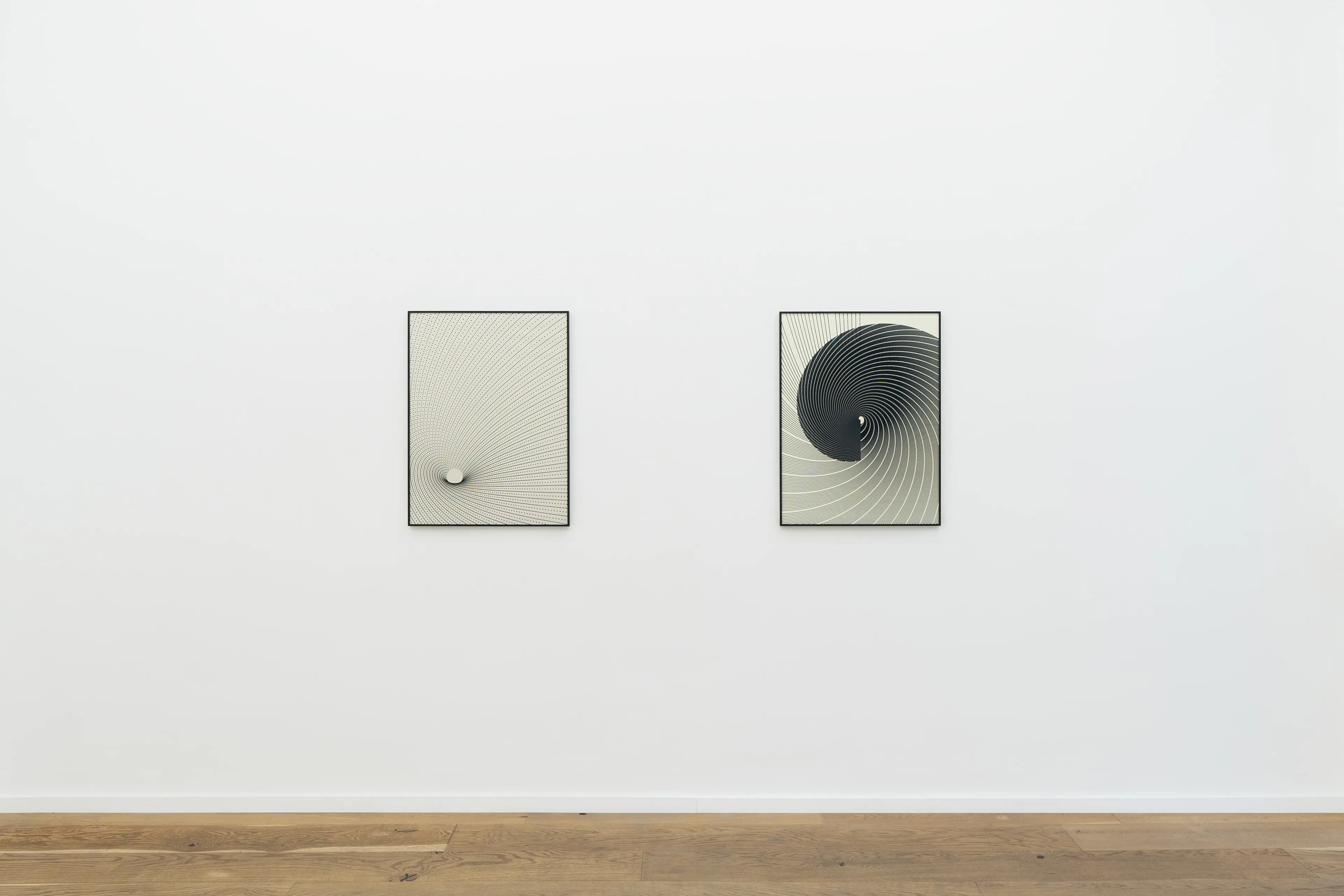
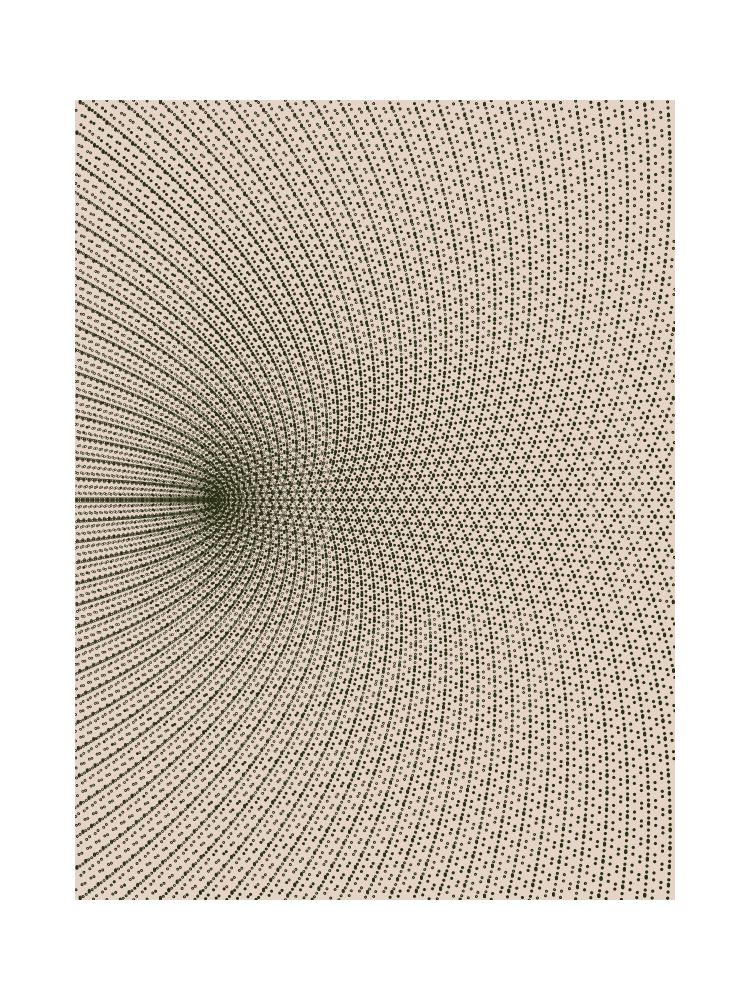
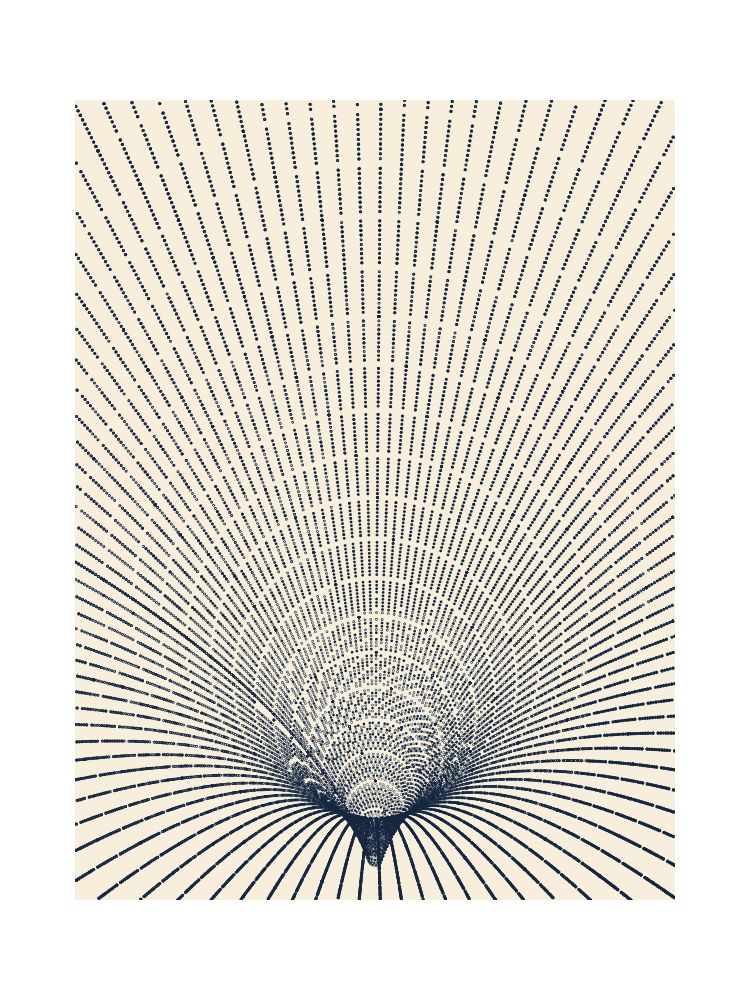
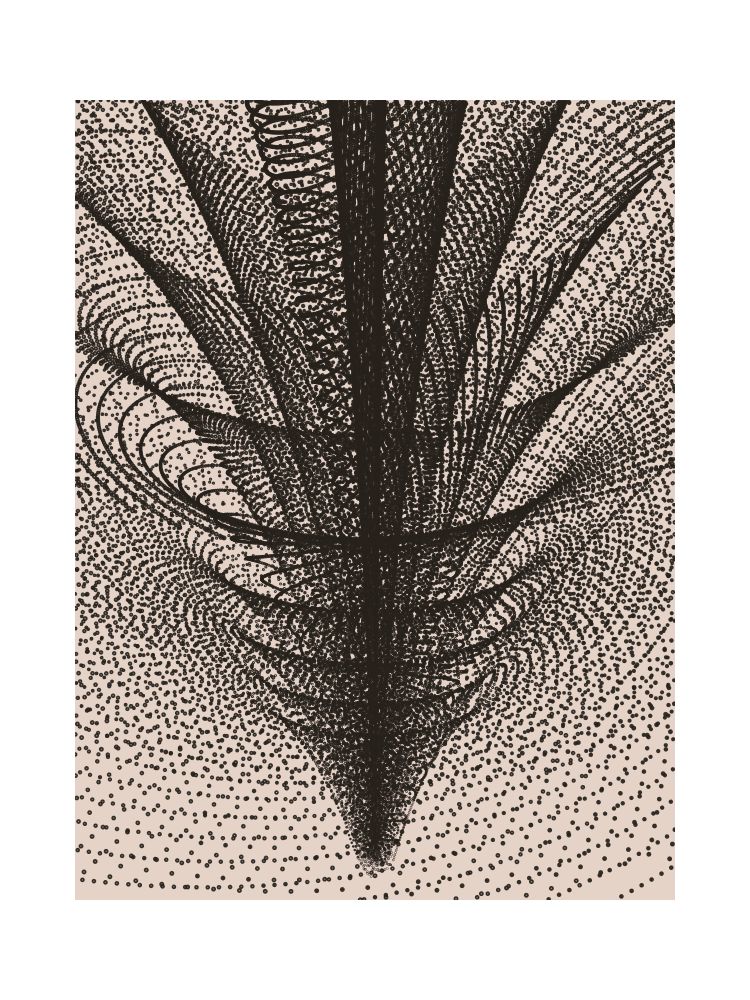
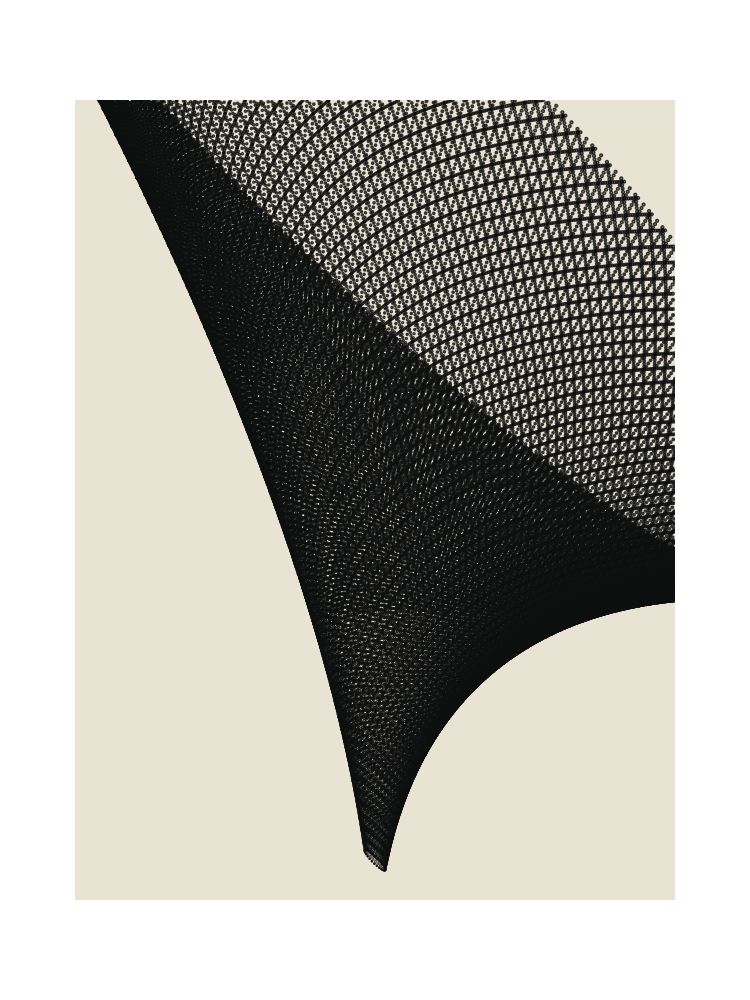
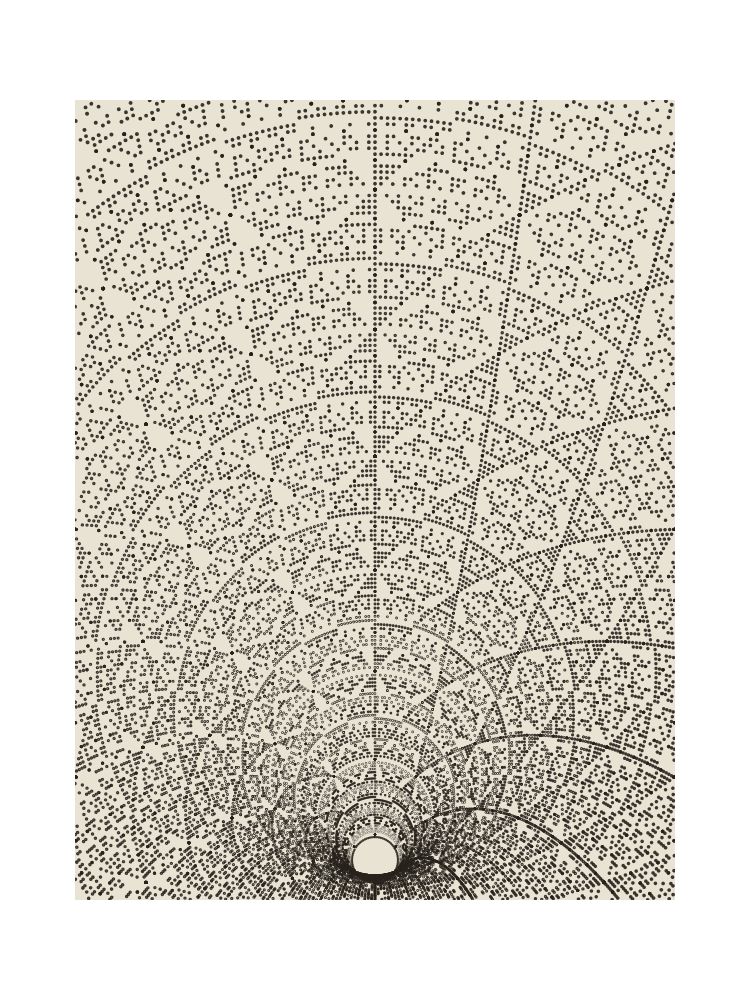
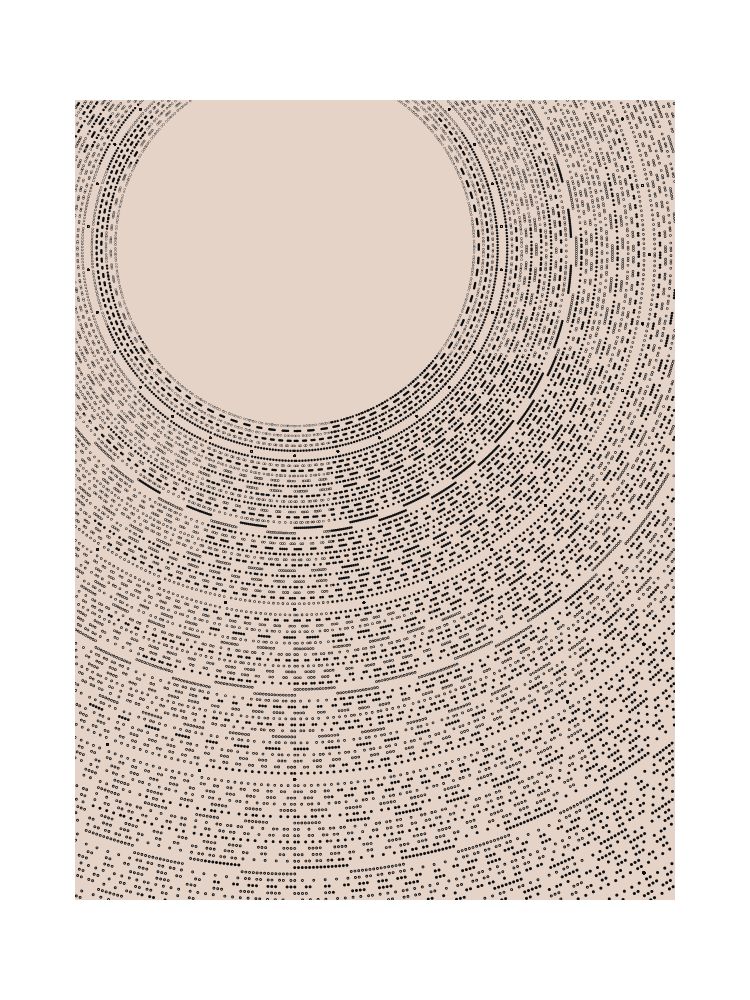
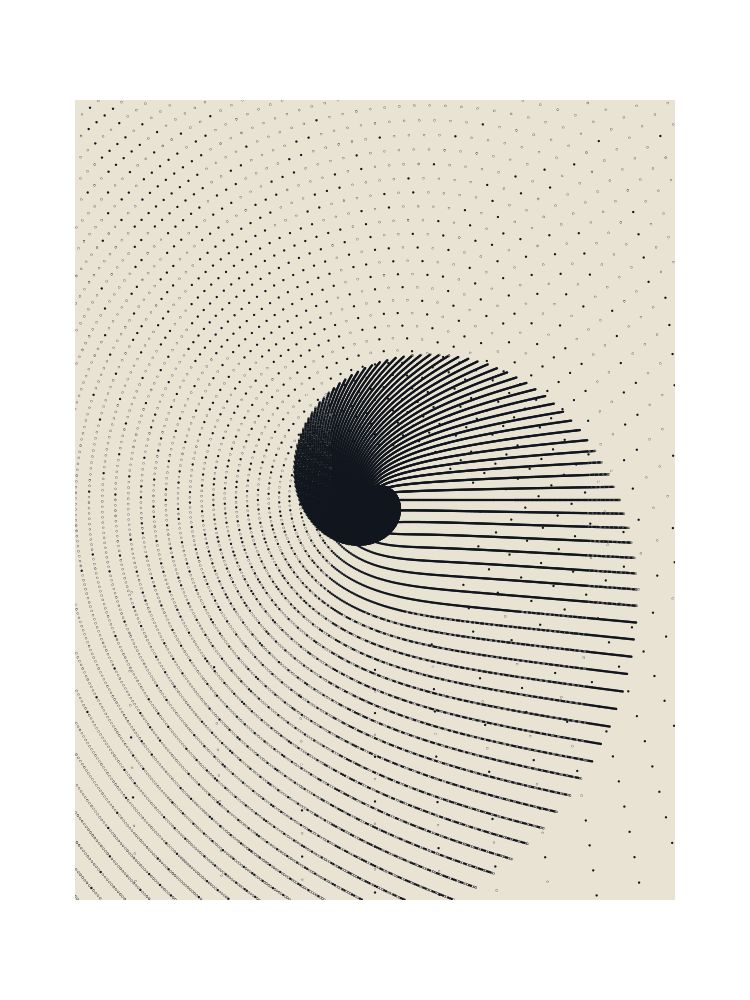
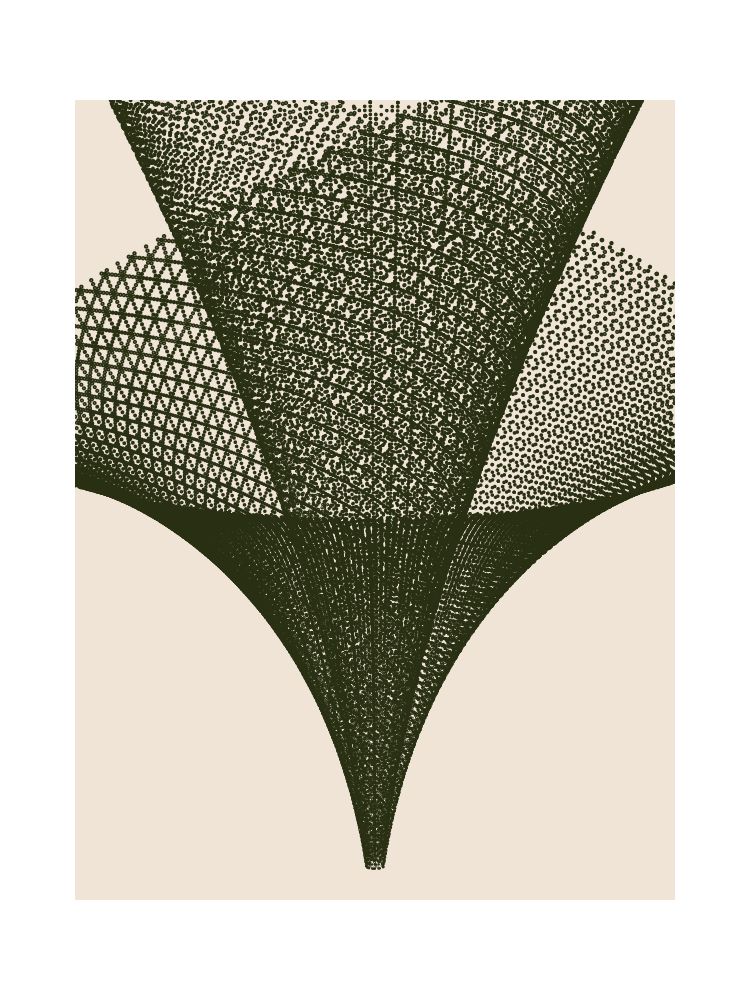
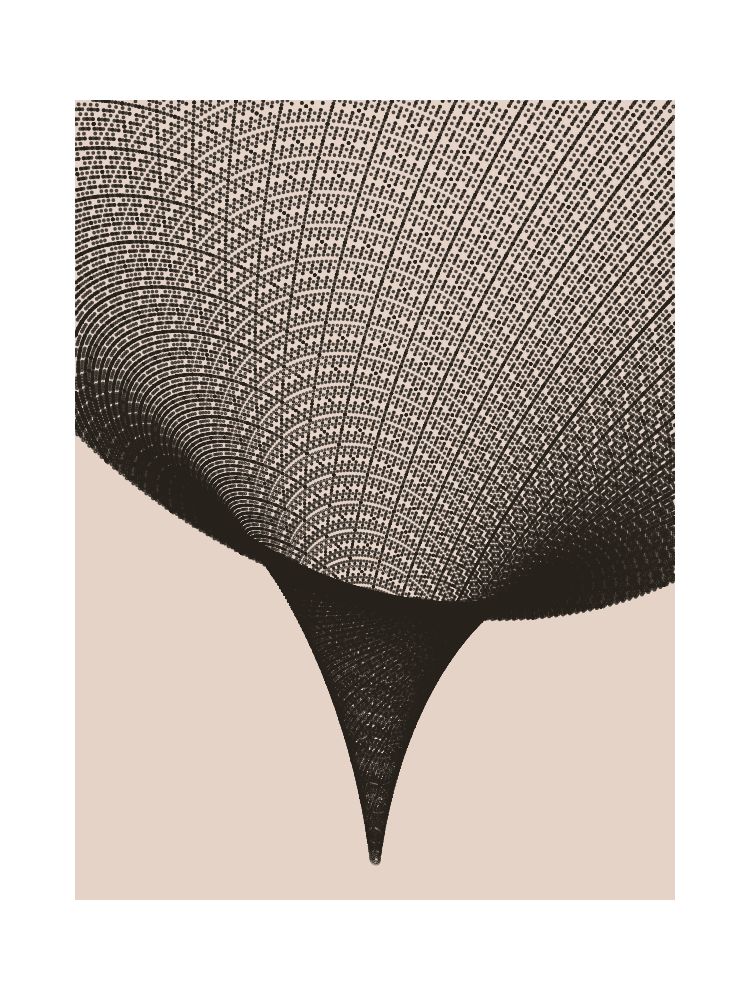
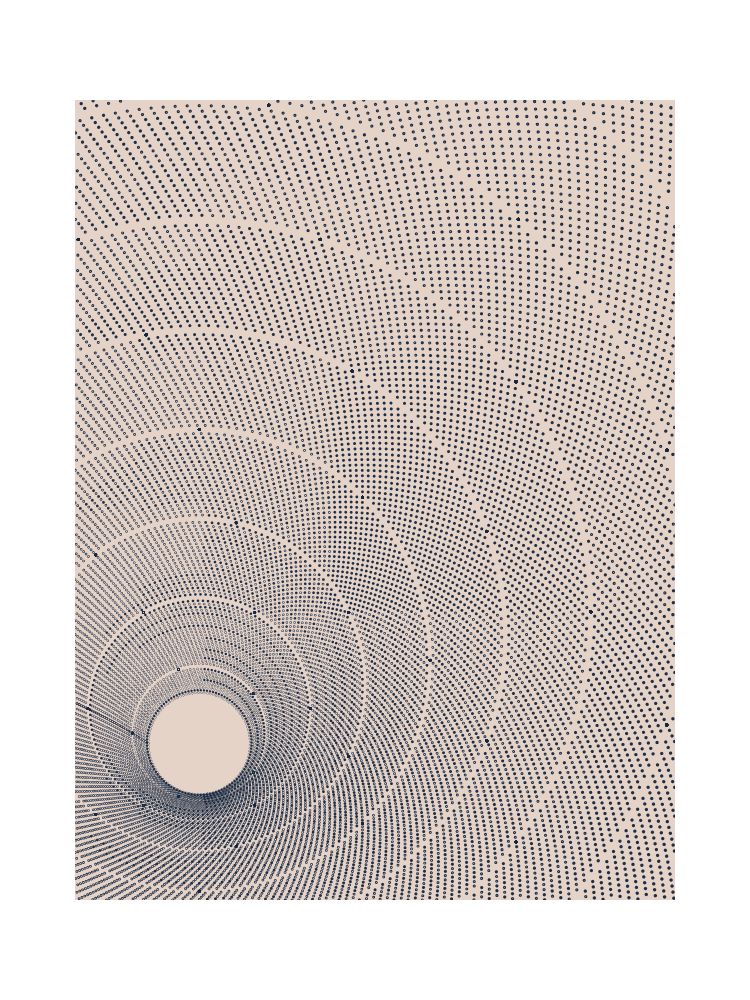
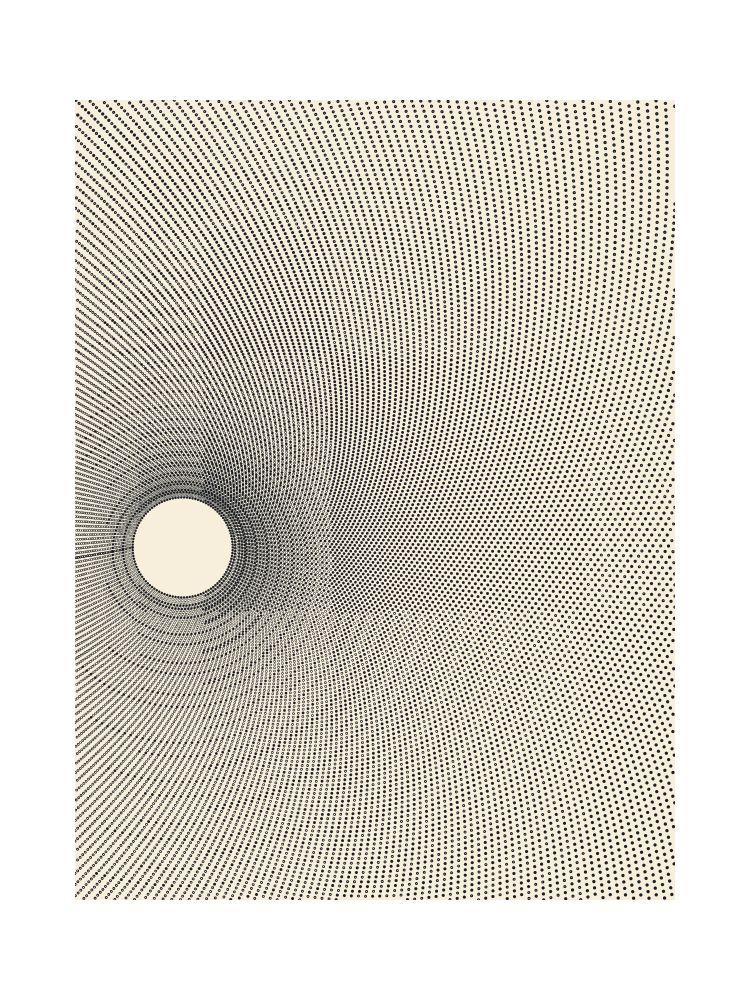
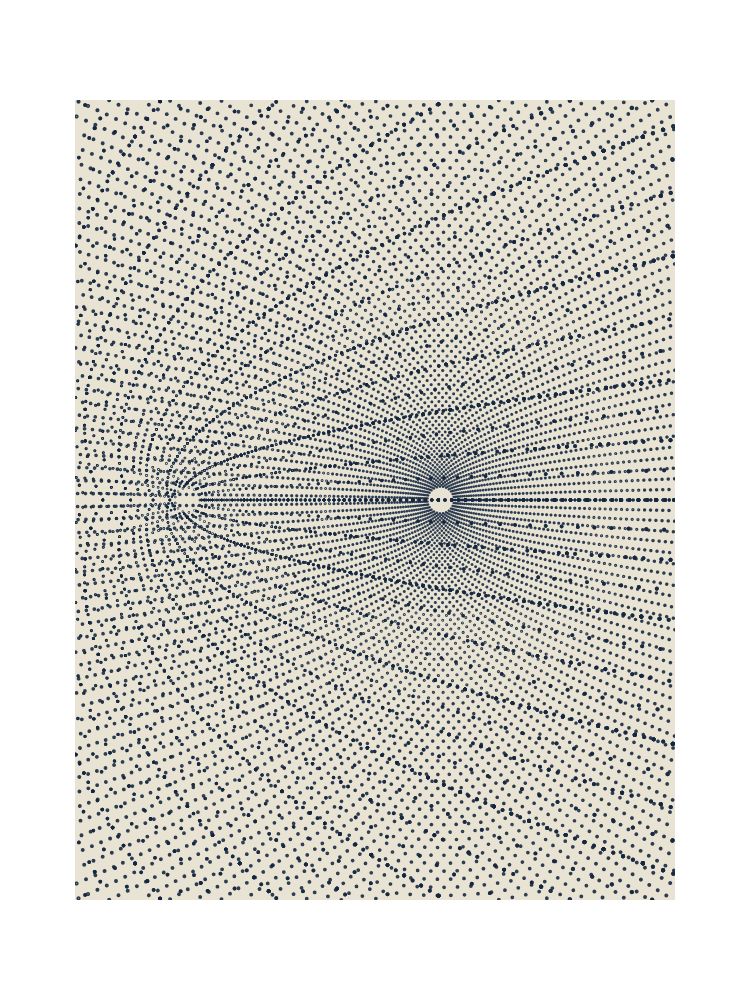
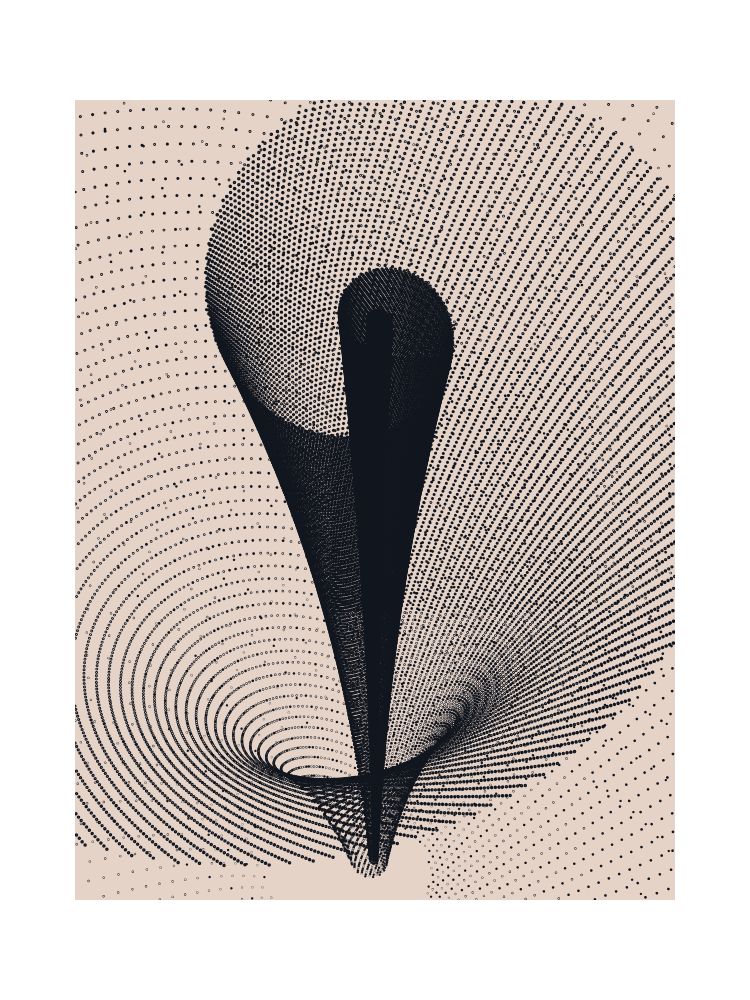
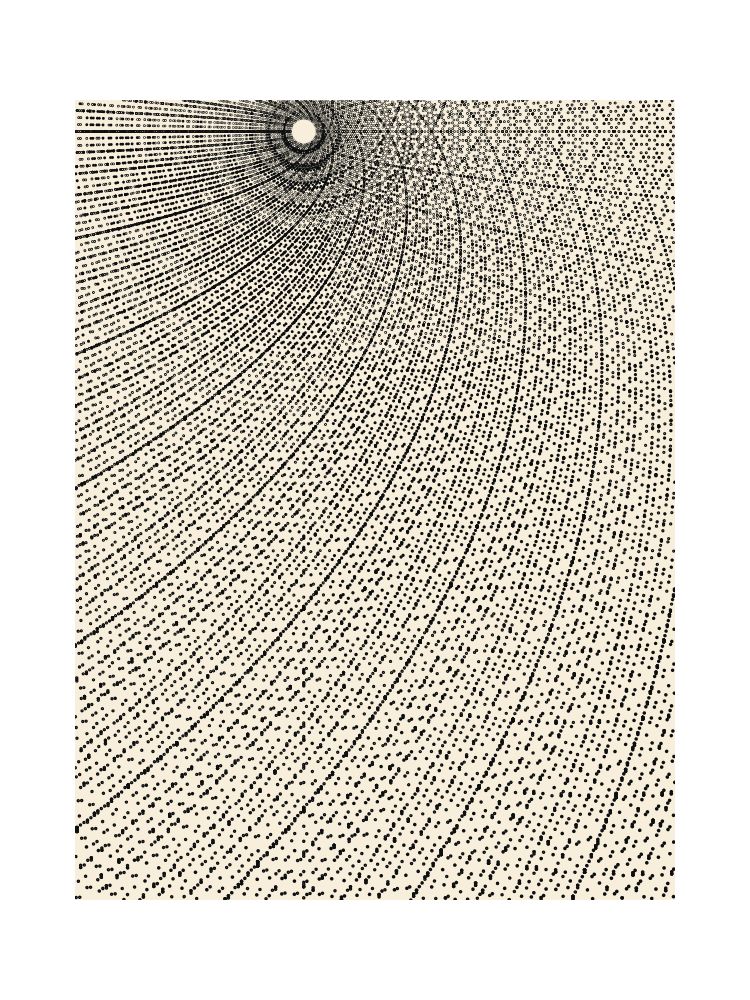
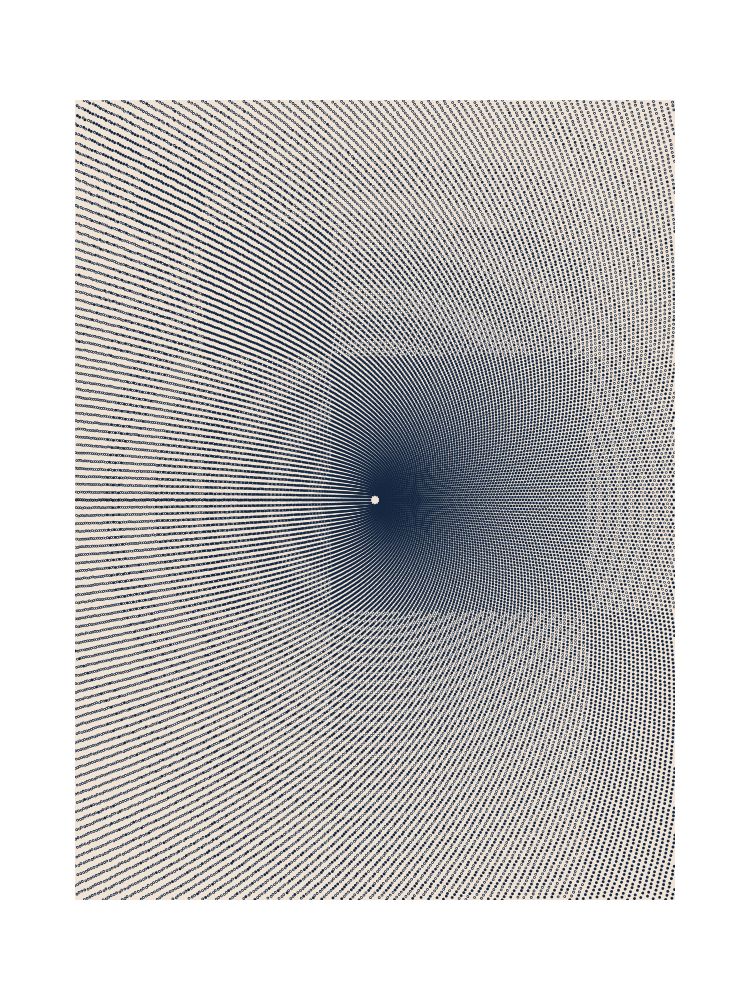
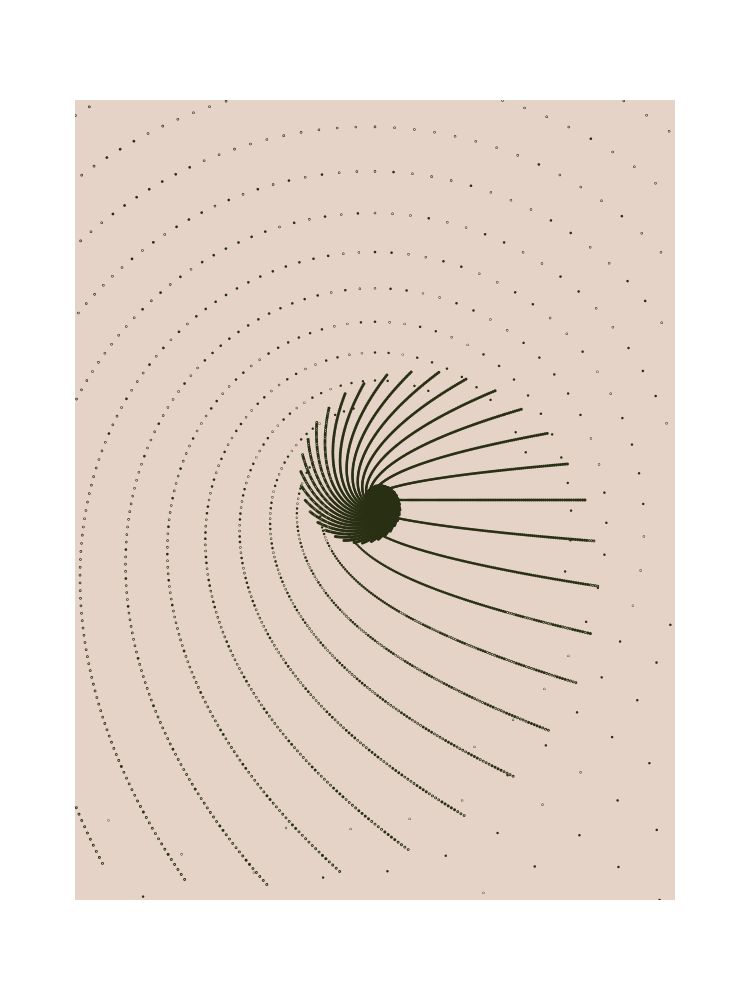
Begin with a point. Nothing dramatic. Just a small insistence on the page, the kind of mark anyone might make without thinking. But repeat it and something changes. A single point becomes a group, and the group begins to behave in ways no one point ever could. Suddenly you are not looking at marks anymore, but at relationships.
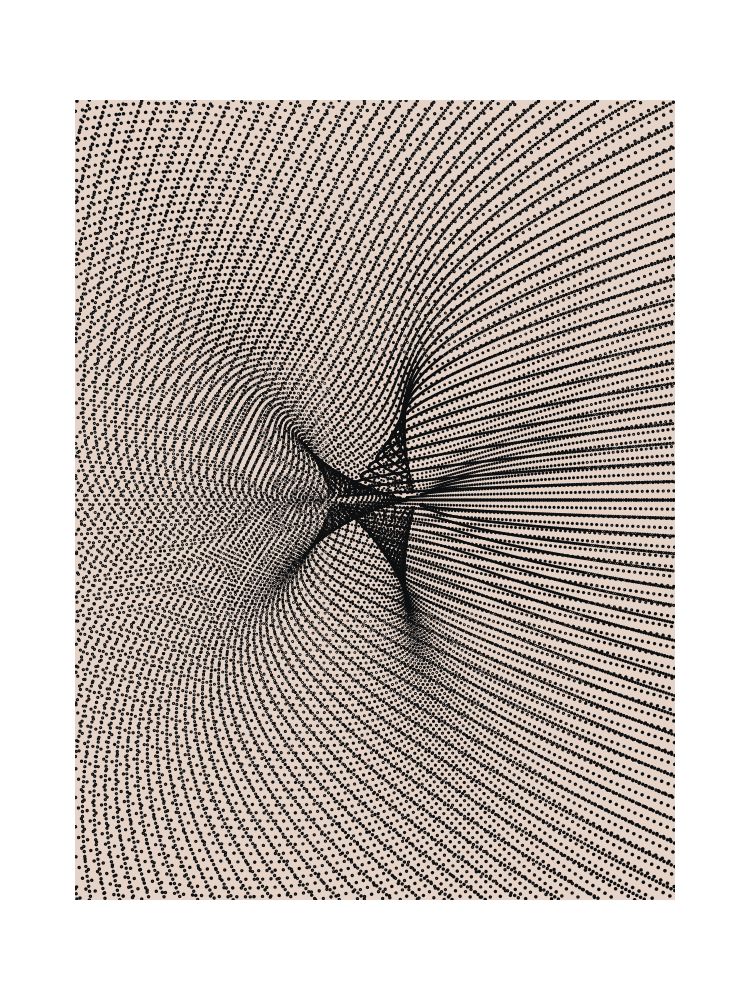
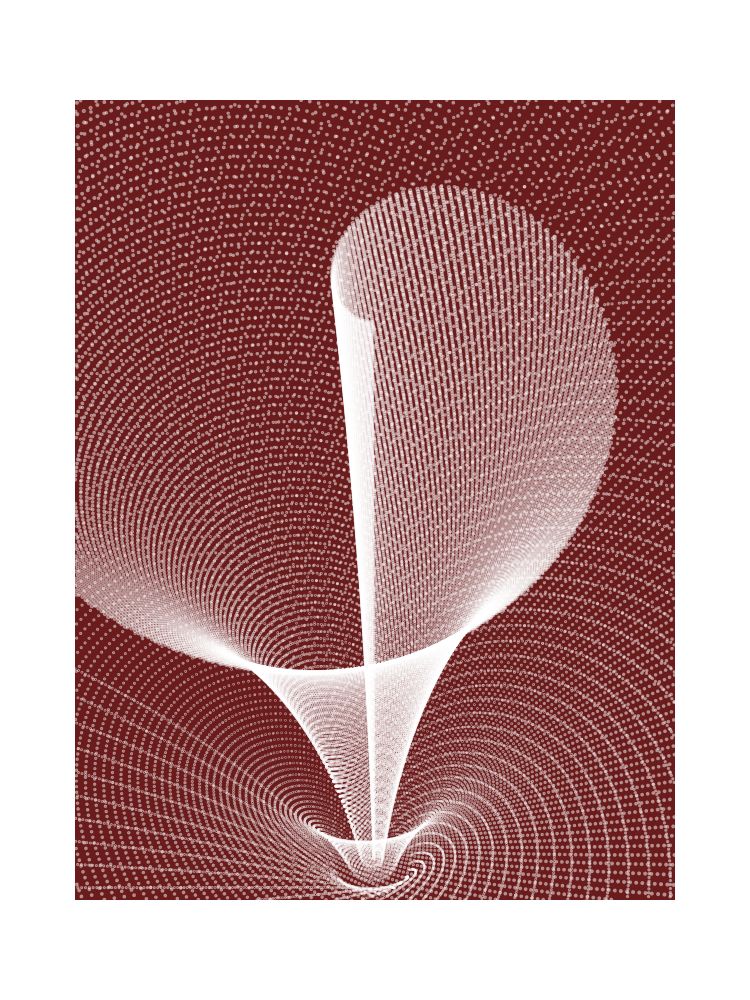
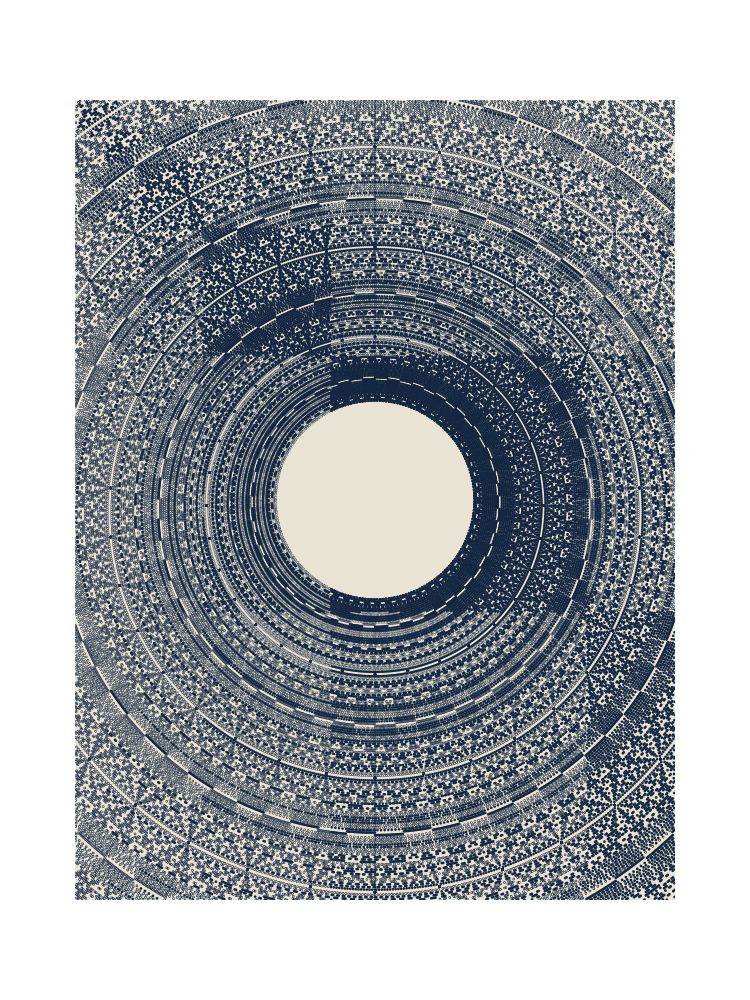
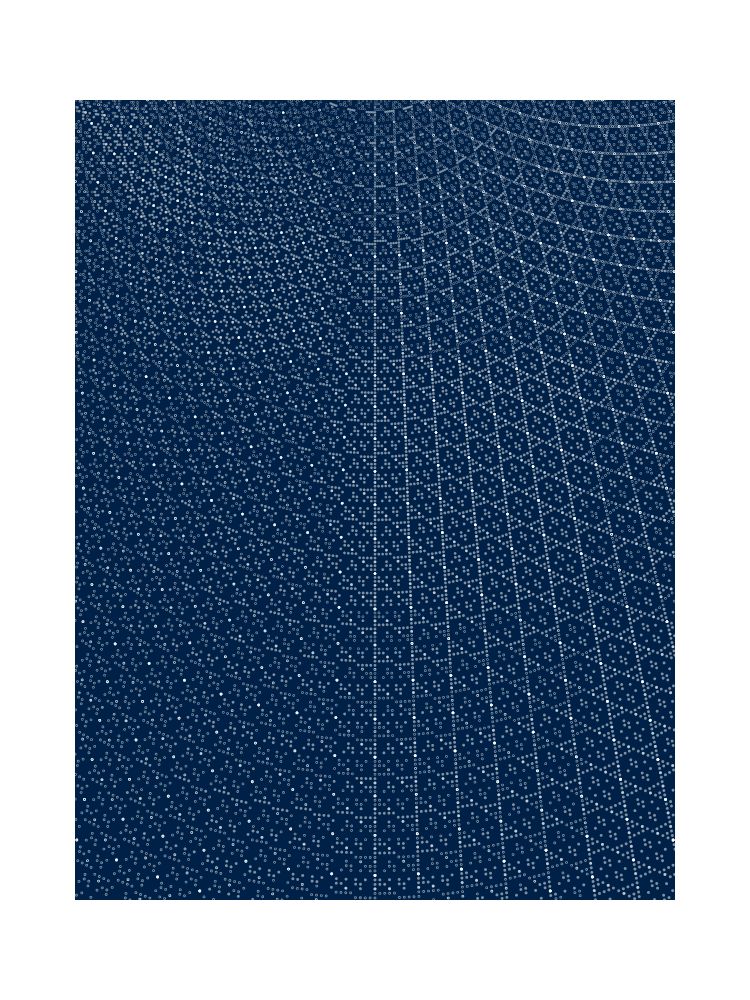
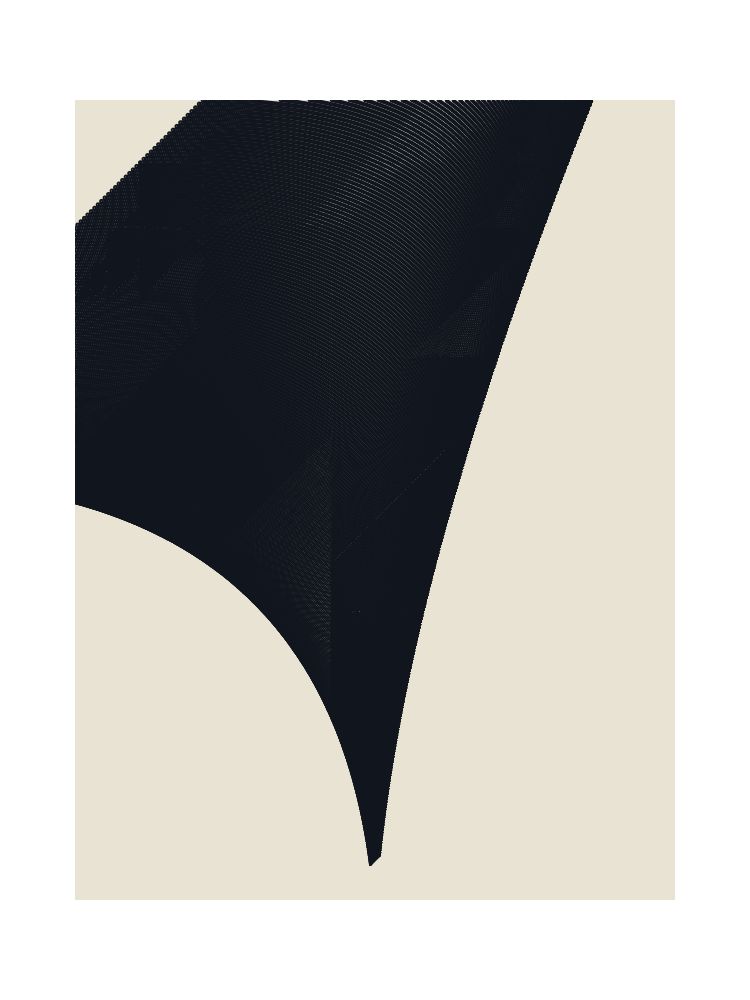
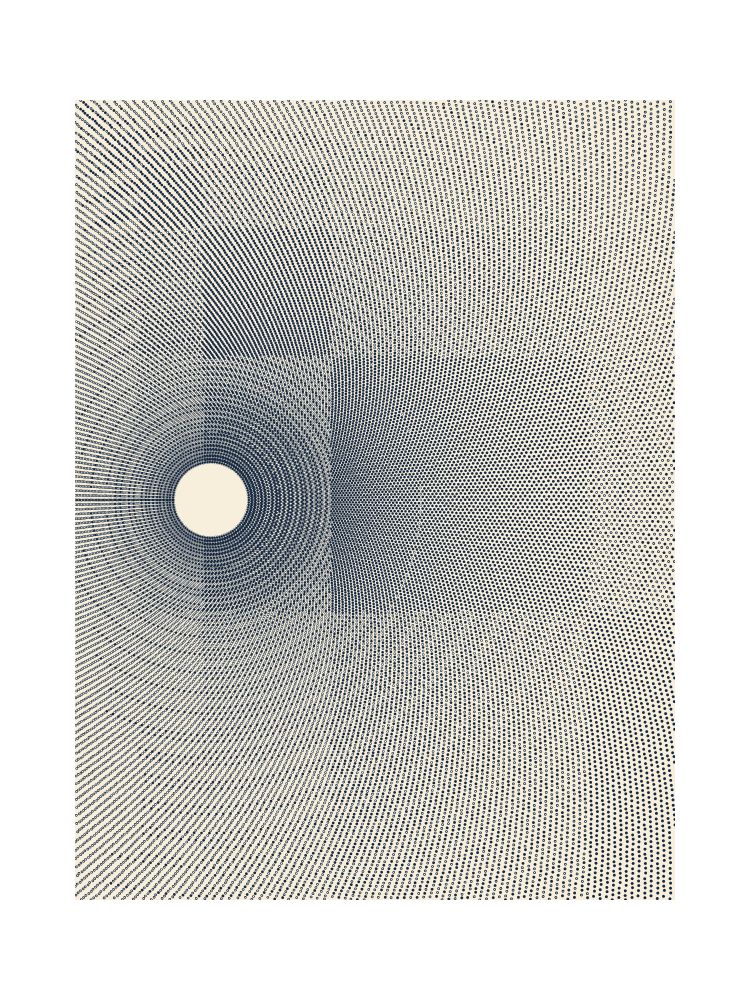
That is how these drawings work. The field seems to twist or lean, as if the whole surface had become alert to a quiet force. Sometimes it feels like the page is folding inward; sometimes it opens like a breath. What you notice first isn’t the math behind it, but the sense that everything is being held together by a center you cannot see. The sphere that appears in a few pieces is not drawn so much as revealed by the field around it.
Up close the marks are almost anonymous, simple and interchangeable. Step back and they fall into something like gravity. Lines bend because they have no choice. Dots gather where the surface tightens. One mark calls to another until the cluster begins to feel like a place. The shift from part to whole is quiet but unmistakable. The drawing appears all at once, yet you sense forces that have been at work for a long time.
Artists have trusted units this small before. Klee, Horwitz, LeWitt, Riley. They understood that repetition is a form of attention, not a mechanical act. Buckminster Fuller had a similar instinct about structure, seeing it not as an object but as something that happens. These drawings share that instinct. They do not show a form placed on the page. They show a form coming into being.
Each piece begins with a seed, a small decision that sets the tone. From there the surface develops the way events do: one shift influencing the next, small tensions building, easing, gathering again. The final image is fixed, but it carries the sense of something that has unfolded over time, the way a story does.
The title comes from George Kubler’s The Shape of Time, a book that describes how forms belong to sequences. A single object makes sense only in relation to what came before and what will come after. These drawings take that idea to heart. They offer different views of a world organized around one steady influence, each one a variation on the same gentle pull.
The work is presented alongside archival limited edition prints, grounding an algorithmic process in physical material.
Pixel Symphony
Mint to Redeem
This project includes a mint to redeem structure for collectors. Physical works can be redeemed based on the number of mints collected:
Collectors who reach one of these thresholds can contact the artist at hello@pixelsymphony.art to receive a redemption code. The redemption code can be used against any of the listed and available works on the website.
Press p in full screen to save a high-resolution PNG.