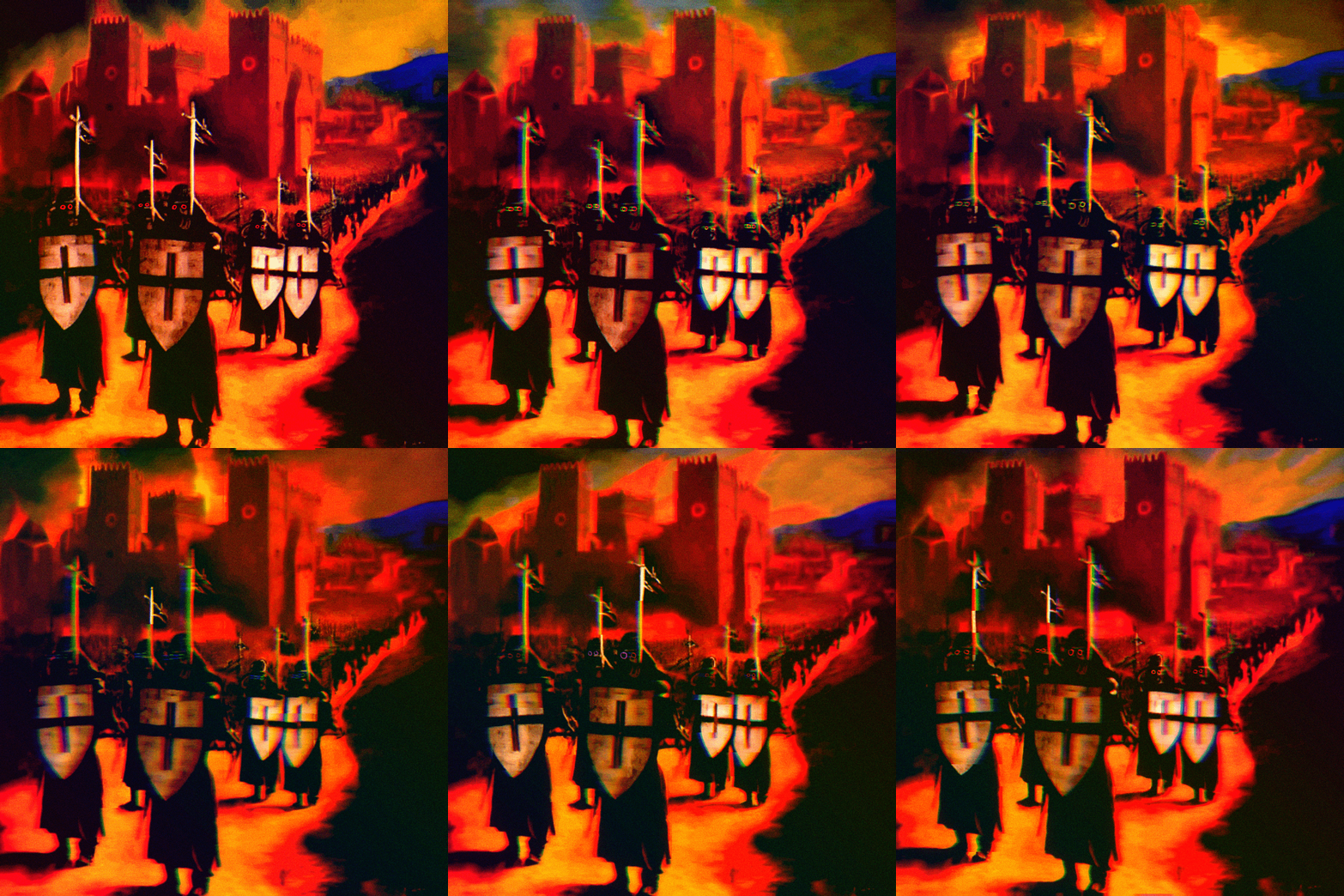
The siege of Jerusalem (June 7 – July 15, 1099) was waged by European forces of the First Crusade, resulting in the capture of the Holy City of Jerusalem from the Muslim Fatimid Caliphate, and laying the foundation for the Christian Kingdom of Jerusalem, which lasted almost two centuries.
The capture of Jerusalem was the final major battle of the first of the Crusades to occupy the Holy Land began in 1095. The siege led to the mass slaughter of thousands of Muslims and Jews and to the conversion of Muslim holy sites on the Temple Mount into Christian shrines.
On June 17, 1099, the Crusaders began the construction of siege weapons. They constructed the finest siege equipment of the 11th century in almost three weeks. This included: two massive wheel-mounted siege towers, a battering ram with an iron-clad head, and numerous scaling ladders and a series of portable wattle screens. The Fatimids kept an eye on the preparation by the Franks and they set up their mangonels on the wall in the firing range once an assault began.
On July 14 1099, the Crusaders launched their attack. By the end of the day they penetrated the first line of defense. On July 15, the assault recommenced in the Northern front. The Franks quickly gained a foothold on the wall, and as the city's defenses collapsed, waves of panic shook the Fatimids.
As the crusaders made their way into the city through the tower of David, they began massacring large numbers of the inhabitants; Muslims and Jews alike. According to eyewitness accounts the streets of Jerusalem were filled with blood. How many people were killed is a matter of debate, with the figure of 70,000 given by the Muslim historian Ibn al-Athir.