The letter arrived on a Tuesday, which was strange because my wife had been dead for three years and the handwriting was unmistakably hers.
Come to the field behind the old train station. Wait until the black suns appear. Don't be afraid.
I made myself a cup of coffee and read it again. Then I fed the cat, washed my cup, and drove to the station.
The field was nothing special. Tall grass, some forgotten farming equipment rusting near a collapsed shed. The kind of place you pass a thousand times without seeing. I stood there for two hours, watching clouds move across a pale sky, feeling foolish.
Then the light changed.
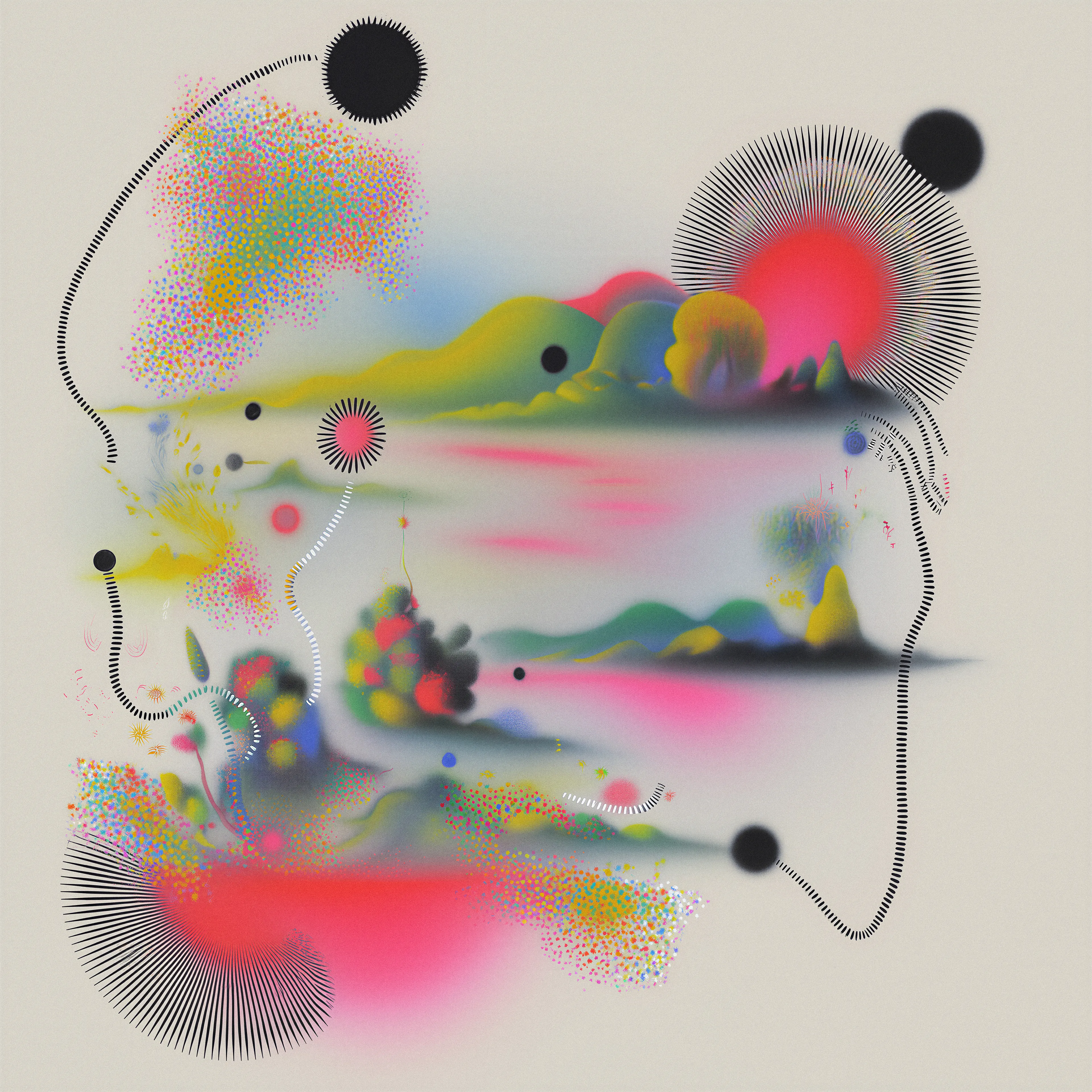
It didn't happen all at once. The sun seemed to lose interest in its job. Colors began separating from things—bleeding upward from the grass, the trees, the distant hills—rising like steam. Pink and yellow and a green so bright it hurt. They gathered into clouds of tiny particles, drifting.
The black suns came next.
They weren't really suns. They were holes, maybe. Perfectly round absences in the fabric of the afternoon, each one surrounded by thin radiating lines like the legs of a hundred spiders. They floated at different heights, some close enough to touch, others far off near what had been mountains but were now just soft shapes losing their definition.
"You came," said someone beside me.
She wasn't my wife. She looked like my wife, the way a song sounds like another song—same melody, different key. Her edges were soft, uncertain.
"I got your letter," I said.
"Not my letter. Her letter. She asked me to send it, before she crossed over."
"Crossed over to where?"
The woman who wasn't my wife gestured at the dissolving landscape, the particle clouds, the black suns watching us like patient animals.
"Here. The place where everything that ends goes to begin again. She works in the color fields now. Sorting the pinks. She always liked pink."
I remembered this. How she'd painted our bedroom wall three different shades before settling on one called Morning Blush. How she'd cried when the hardware store discontinued it.
"Can I see her?"
"You're seeing her now. Look."
She pointed to a cloud of particles drifting past—confetti made of light, pinks and corals swirling together. For a moment, I thought I saw a shape in it. A gesture I recognized. The way she used to push hair from her face while reading.
"She wanted you to know she's not lonely here," the woman said. "She was worried you'd think she was lonely."
"I'm the one who's lonely," I said, and my voice came out strange, like it belonged to someone standing very far away.
"Yes. She knows. That's why she sent the letter."
The black suns were drifting closer now, their radiating lines brushing against each other with a sound like wind through dry leaves. One of them passed directly over me, and for a moment I felt nothing—not warmth, not cold, just an absence of feeling so complete it was almost peaceful.
"What are those?" I asked.
"Doors. Or maybe eyes. We're not sure. They were here before we came, and they'll be here after we leave. They don't speak to us."
"Where do they lead?"
"Nowhere. Or everywhere. It depends on what you're looking for."
I watched the colors swirl—my wife's colors, pink and coral and soft magenta, mixing with yellows and greens from other lives, other endings. The landscape had almost entirely dissolved now. Just shapes suggesting mountains, water, trees. A memory of a place rather than the place itself.
"Will I see her again? Really see her?"
"When you're ready to sort colors, you will."
"How will I know when I'm ready?"
The woman smiled. It was almost my wife's smile. Almost.
"You'll stop being afraid of the black suns."
I drove home as the real sun was setting. The cat was waiting by the door, annoyed. I fed him, made another cup of coffee, sat in the kitchen with the lights off.
The letter was still on the table. In the darkness, I could almost see it glowing—soft pink, like the bedroom wall, like the clouds of particles, like everything she'd touched and changed and left behind.
I wasn't ready yet. But for the first time in three years, I thought I understood what ready might feel like.
Outside, the stars came out one by one, and I wondered if any of them were doors.
The cat climbed into my lap around midnight. He purred for a while, then stopped and stared at the window with that look cats get when they see things we can't.
I didn't ask him what he saw.
Some questions are better left for the color fields.