Takeshi first noticed the field on a Tuesday in late October, which seemed strange because he had walked this same route to the convenience store for eleven years and had never seen it before.
It wasn't really a field, he supposed. More like a pause in the world—a gray expanse that stretched toward mountains he also couldn't remember existing. The air there smelled like the inside of a new eraser, clean and full of potential mistakes.
He was thirty-four years old and worked in a small office where he processed insurance claims. His wife had left him two years ago, taking with her the cat, the good rice cooker, and whatever it was inside him that used to feel things. She'd said he was like a room where all the furniture was covered in sheets. You're there, she'd told him, but nothing is really there.
He stepped into the field.
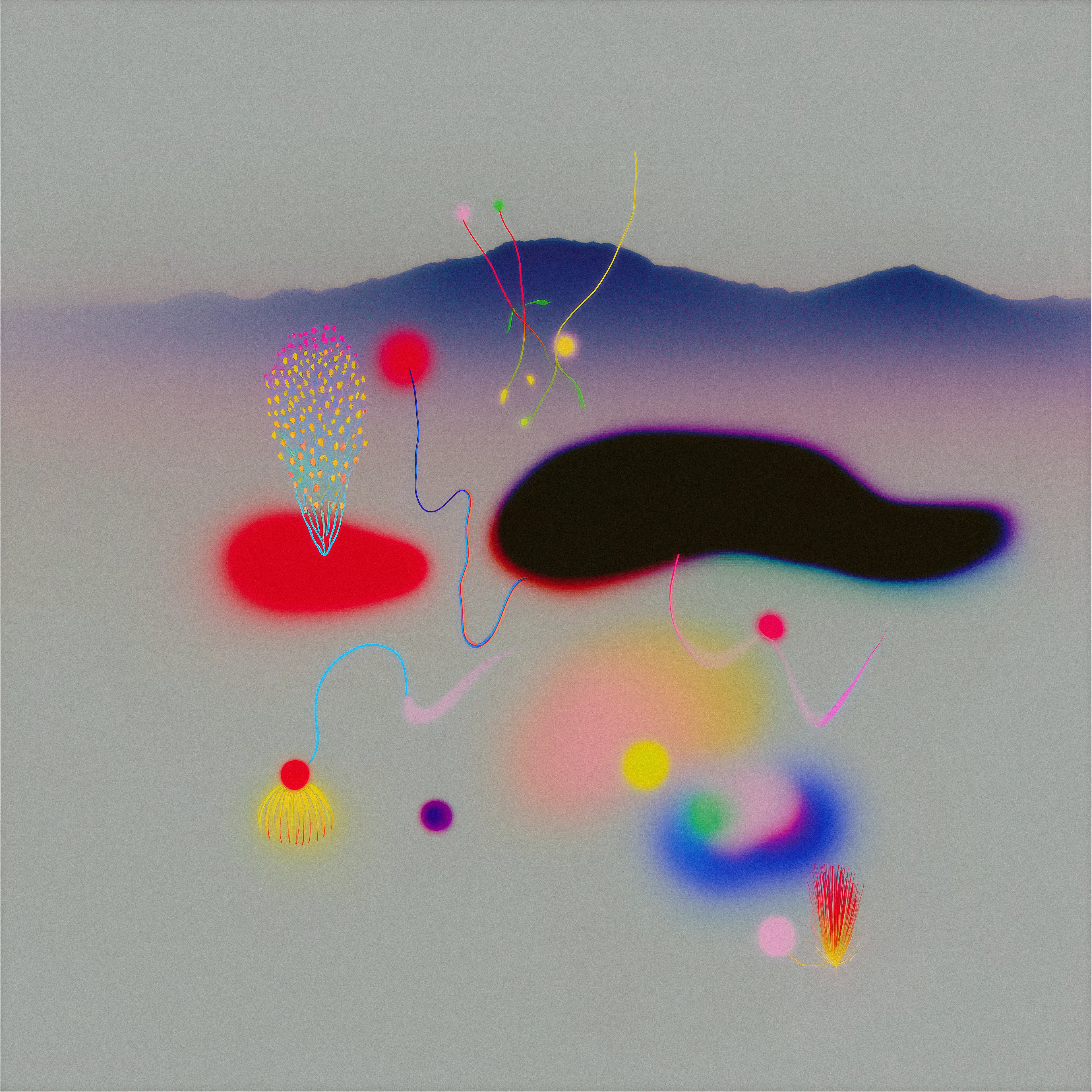
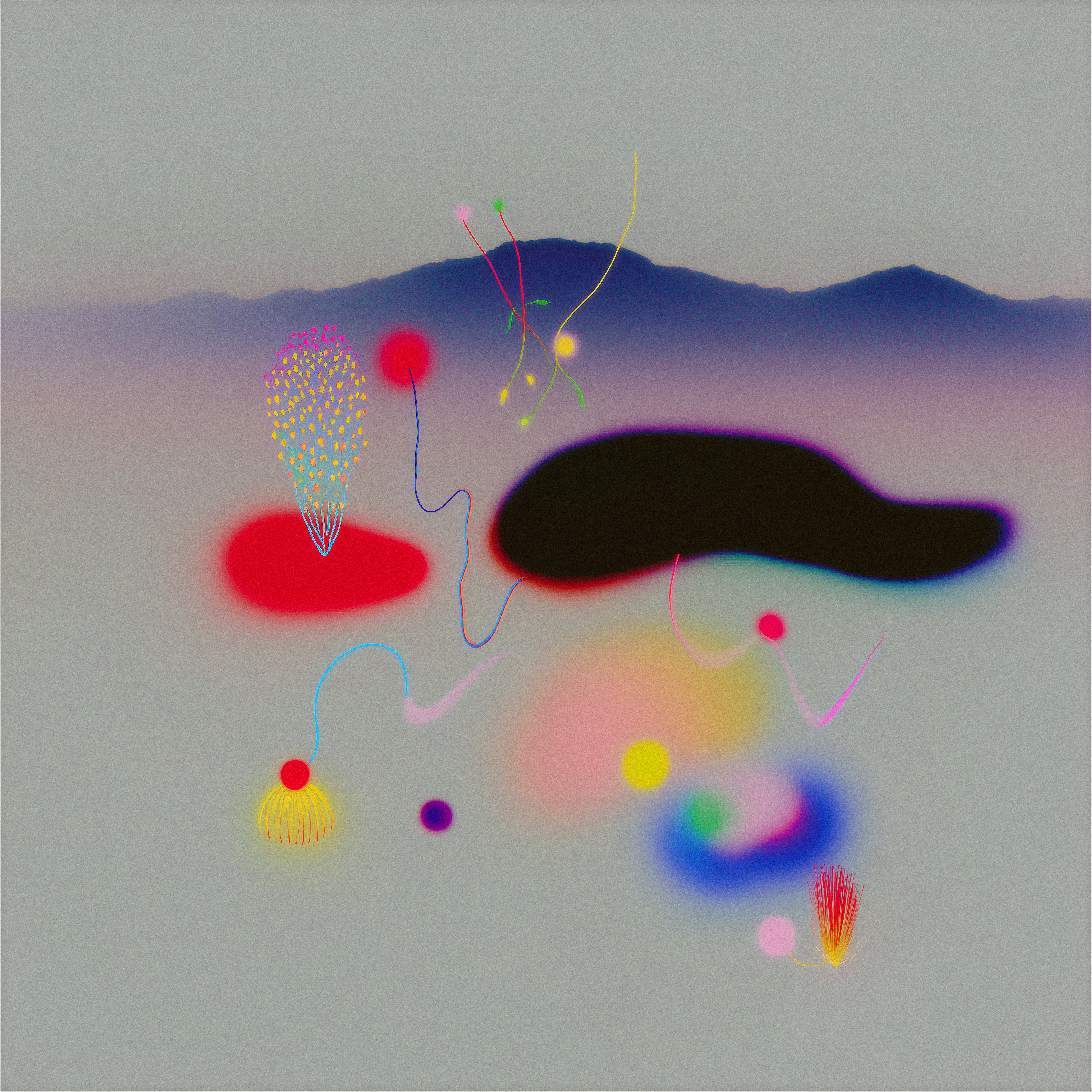
The ground was soft, like walking on held breath. Scattered across the gray surface were shapes that didn't belong to the regular world—soft red pools that pulsed faintly, a dark form like a sleeping creature's shadow, orbs of color that floated without reason. Near his feet, something that looked like a small yellow jellyfish sat perfectly still, its tendrils drawn in fine lines as if by a careful child.
"You can see us," said a voice.
Takeshi turned. There was nothing there—only a cluster of dots arranged vaguely like a teardrop, yellow and orange, hovering above a red cloud.
"We weren't sure anymore," the voice continued. It seemed to come from everywhere, or perhaps from inside his own chest. "It's been a long time since anyone wandered in."
"What are you?" Takeshi asked. His voice sounded flat in the open air, the way voices do when there's nothing for them to bounce off of.
"We're what's left over," the dot-cluster said. "When a child imagines something and then forgets it. When someone almost remembers a dream but loses it. When a feeling doesn't have anywhere to go."
Takeshi looked at the dark shape in the center of the field—it was like a hole in a painting, soft-edged and absolute.
"That one," the voice said, reading his gaze, "is what remains of a man who stopped being surprised by anything. He came here three years ago and simply... stayed. We don't know if he's sleeping or if he's become something else entirely."
"That sounds lonely," Takeshi said.
"Does it? He doesn't seem to mind. Loneliness requires someone to miss."
Thin lines of color rose from the ground near the mountains—pink and green and red, reaching upward like plants searching for a sun that wasn't there. They swayed in a wind Takeshi couldn't feel.
"What do you want?" he asked.
"We don't want anything. Wanting is a living thing. We're more like... echoes. We repeat and repeat in a room that no one enters anymore."
Takeshi sat down. The ground accepted him gently. He thought about his apartment, the unwashed dishes in the sink, the television he left on for the sound of human voices. He thought about how he'd stopped calling his mother because he'd run out of things to say. How he sometimes stood in the shower until the water went cold because he forgot he was standing at all.
"Can I stay here?" he asked.
The dot-cluster drifted closer. "Many people ask that. But you still have weight. You'd sink through eventually, back into the regular world. Only those who've become truly hollow can float here."
"How do I become hollow?"
"You don't try. You just... forget to be anything else. One day you realize you're not a person anymore. You're just the space where a person used to stand."
A small pink orb drifted past Takeshi's shoulder. It felt warm, like a memory of summer.
"I should go back," he said, though he didn't move.
"Yes," the voice agreed. "But you'll return. They always do, the ones who can see us. You'll come back tomorrow, or next week, or in a year. And each time, the field will be a little more visible, a little more solid, and the other world—the one with convenience stores and insurance claims—will seem more like the dream."
Takeshi stood. His legs worked, which surprised him somehow.
"What's beyond the mountains?" he asked.
"We don't know. None of us have the weight to climb them. Perhaps nothing. Perhaps everything that was ever forgotten all at once. Perhaps just more gray."
He walked back toward the edge of the field. Behind him, the colors pulsed and drifted. The dark shape in the center didn't stir.
"One more thing," the voice called. "The jellyfish by your foot—the yellow one. It was a girl's imaginary friend. She's forty-seven now with children of her own. She works as a dentist in Osaka. She's happy, mostly. The jellyfish has been waiting here for forty years, but it doesn't know for what."
Takeshi looked at the small yellow form. Its lines were so delicate, so carefully drawn.
"Does it remember her?"
"It doesn't remember anything. But it keeps the shape of being remembered. That's different. That's almost like love, if you don't look at it too closely."
Takeshi walked home. He made dinner—instant ramen with an egg cracked in, the yolk soft and golden. He washed the dishes in the sink, all of them, even the ones from last week. He called his mother and talked about nothing for twenty minutes. She sounded surprised to hear from him.
That night, he dreamed of a field full of colors and a mountain he couldn't climb. In the dream, he was made of dots—hundreds of tiny dots—and he was waiting for someone to remember what shape he used to be.
When he woke, the morning light through his window was gray.
It looked, he thought, exactly like the beginning of something.
He went back to the field every Tuesday for a year. Then every day. Then he stopped counting. The convenience store clerks noticed he came less often. His desk at the insurance company gathered dust. His mother's calls went to voicemail.
Somewhere in a gray field, a new shape appeared—not quite dark, not quite bright. It floated alongside the others, waiting for nothing, remembering everything, too hollow to sink, too heavy to disappear.
The jellyfish didn't move. It never did.
But if you looked closely—and almost no one did—it had drifted, over the years, just a little bit closer to where he stood.